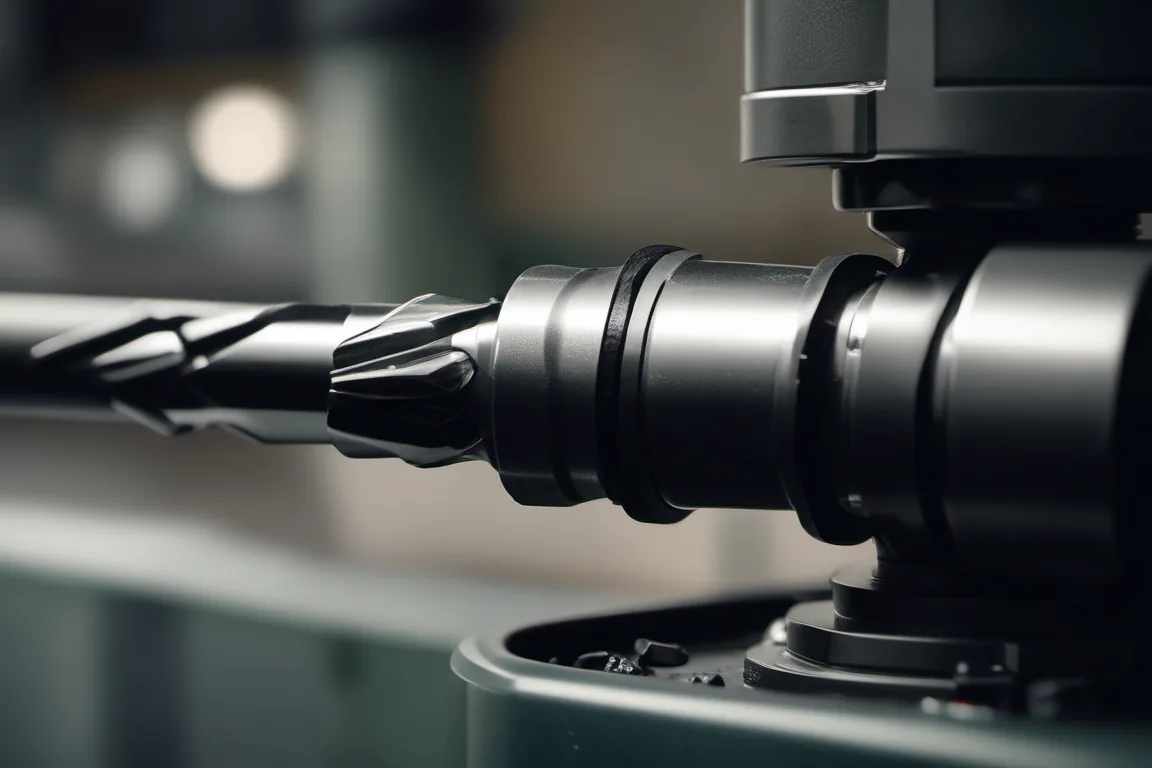
Optimal retraction rate prevents tool edge breakage and hole surface defects by balancing withdrawal speed with chip clearance efficiency. Rapid retraction can shear off cutting edges against bore walls, diminishing durability. Slow retraction forces tools to recut chips already removed, degrading finish quality. The DC326 series maintains a balance at 150 to 250 m/min speeds for clean hole production without edge wear. This ensures consistent finishes with minimal tool damage across various materials and sizes.
The variable and the range it can take
The retraction rate influences hole quality by balancing edge wear with chip clearance efficiency during drilling operations.
For optimal performance, this rate must be carefully adjusted according to specific cutting parameters and workpiece material properties.
| Specification | Value |
|---|---|
| Point angle | 118 ° |
| Carbide hardness | 89–93 HRC |
| Series diameter range | 0.04–3.17 mm |
What it changes in the cut
Adjusting the retraction rate affects cutting force by balancing chip clearance efficiency with edge stability. Higher withdrawal speeds reduce contact time but can cause increased vibration and noise levels. Lower rates enhance stability but may lead to excessive friction and heat generation. Retraction speed directly influences temperature rise due to prolonged metal-to-metal contact at slower rates. Faster retraction reduces localized heating, minimizing thermal damage risks on the tool edges.
Changing the rate also impacts chip formation by regulating how chips are ejected from the hole. Rapid withdrawal can lead to shorter, finer chips that are easier to manage and evacuate. Slower retraction allows for longer continuous chips but increases the risk of chip recutting inside the hole. Recut chips may cause surface finish defects and increase machining time. Properly setting the rate ensures consistent chip size and optimal material removal efficiency.
Where the limit comes from
Carbide hardness ranges from 89 to 93 HRC, providing excellent wear resistance for drilling operations. The geometry with a point angle of 118 degrees helps in distributing cutting forces evenly across the edge. Retraction rate limits are set by tool strength and material properties rather than machine capabilities alone. For aluminium, recommended spindle speeds range from 25000 rpm to 16000 rpm for optimal performance.
Feed rates should be adjusted between 50 mm/min and 1200 mm/min depending on the workpiece thickness and surface finish requirements. Chip clearance efficiency decreases when retraction is too slow, causing chips to recut and degrade hole quality. Rapid retraction can lead to increased cutting forces, potentially breaking the tool edge if not balanced correctly. Adjusting these parameters ensures a balance between efficient chip removal and maintaining edge integrity during drilling operations.
Setting it in practice
Start with a retraction rate that matches your feed and spindle speed for optimal chip clearance and edge stability. Set initial withdrawal values based on tool geometry and material hardness, ensuring efficient cutting without excessive force. For aluminum drilling, begin by setting withdrawal rates between 0.01 mm/tooth to 0.05 mm/tooth for fine detail work. Increase the rate gradually if you encounter chipping or poor surface finish issues during operation. Monitoring the first hole closely allows adjustments to be made before moving on to subsequent holes.
Ensure the cutting parameters align with your material and tool specifications for right results. For common materials, use a feed rate of 0.02 mm/tooth to 0.08 mm/tooth while maintaining a spindle speed within the recommended range. This balance reduces wear and extends tool life by preventing excessive heat buildup at the cutting edge. Carefully observe any signs of overheating or inconsistent hole quality in the initial holes drilled. Adjust retraction rates as necessary to optimize performance for your specific application requirements.
Frequently asked
What is the ideal retraction rate for carbide drills?
Retraction rate affects hole quality and tool longevity. Pull too fast, risk breaking the cutting edge; pull too slow, re-cut chips. Match retraction speed to feed rate for optimal results.
How hard are your carbide tools?
Our carbide tools have a hardness rating of 89 to 93 HRC, ensuring durability and resistance against wear during machining operations.
What is the point angle on DC326 drills?
DC326 drills feature an 118-degree point angle, providing excellent performance in various materials by minimising thrust force and maximising chip clearance.