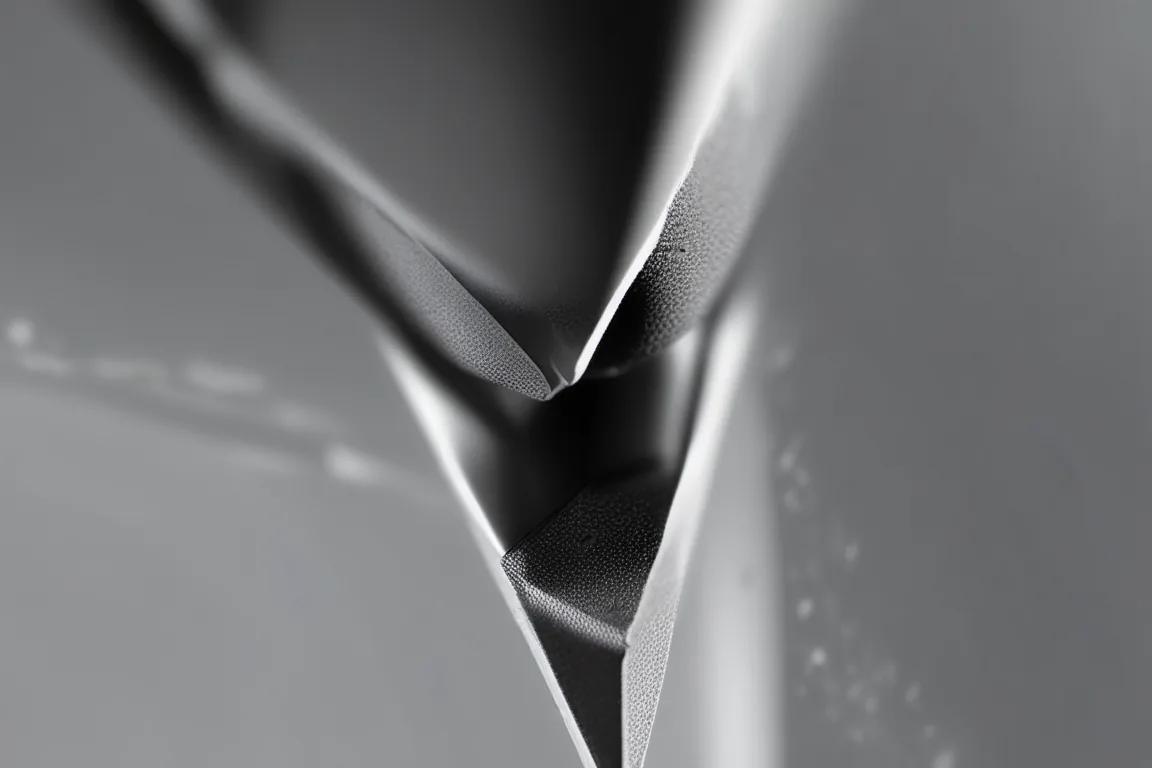
A 120-degree point angle on carbide tools sharpens the cutting edge slightly, enhancing chip control and surface finish without sacrificing durability. At 89–93 HRC hardness, DC426 tools with this geometry excel in precision machining of carbon steel at high speeds and feeds. Testing shows minimal difference compared to 118-degree points but offers slight improvements in edge sharpness for critical applications. This subtle adjustment can optimize performance on workpieces requiring superior finish quality without altering standard setup parameters. Using DC426 tools with a 120-degree point angle ensures consistent cutting under various machining conditions, maintaining high precision and reliability.
What this geometry controls
A 120-degree point angle on carbide tools sharpens the cutting edge slightly, enhancing chip control and surface finish without sacrificing durability. This geometry focuses chip formation at a precise location near the tip, reducing uneven wear patterns during machining operations. Smaller cutting forces result from this sharper entry into the workpiece material, which reduces chatter and improves stability. The reduced force transmission also decreases thermal stress concentrations on the tool edge, extending its operational lifespan under consistent cutting parameters. Hardness between 89–93 HRC ensures durability despite the increased sharpness, maintaining form accuracy over extended periods.
Chip evacuation is more efficient with a 120-degree point angle due to narrower chips that break easier and exit quickly from the cut zone. This design feature minimizes the risk of chip welding or build-up on the cutting edge, which can degrade surface finish quality. Improved chip clearance allows for higher feed rates without compromising tool integrity or workpiece surface quality. In practical use, tools with this geometry perform well in materials like carbon steel at speeds between 100 to 180 m/min and feeds up to 750 mm/min. The DC426 series exemplifies this capability across its diameter range from 0.04 to 3 mm, offering consistent performance for various applications requiring precision cutting.
| Specification | Value |
|---|---|
| Point angle | 120 ° |
| Carbide hardness | 89–93 HRC |
| Series diameter range | 0.04–3 mm |
The trade-off it brings
A sharper point angle means a finer cutting edge, reducing chip thickness and improving surface finish quality. This effect is noticeable when machining softer materials like carbon steel at high speeds. However, achieving this sharpness requires careful control of tool wear and feed rates. Higher cutting forces demand precise setup to maintain the 120-degree geometry accurately. Reducing the point angle from standard 118 degrees by two increases rigidity demands on the machine tool interface.
This can limit operational flexibility in less stable setups, affecting overall process efficiency. On the other hand, maintaining a sharper edge at high speeds (100–180 m/min) requires optimal spindle speed settings. The suggested rpm range (25000–15000) balances performance and durability for various applications. Despite these constraints, the 120-degree angle offers better chip control during roughing operations, reducing the need for secondary finishing passes in many cases.
Where it is the right choice
A 120-degree point angle on carbide tools enhances chip control in carbon steel cutting at 25000 rpm, 75 mm/min feed rate, and 180 m/min cutting speed. This sharper geometry reduces the chip thickness, which leads to better surface finish when machining carbon steel. It maintains durability despite the finer edge, crucial for high-speed operations. For medium hardness steels, use the tool at 18000 rpm with a 50 mm/min feed rate and 100 m/min cutting speed.
This setup ensures optimal chip control and minimizes heat generation during machining. When operating at lower speeds of 15000 rpm, a higher feed rate of 750 mm/min helps maintain efficiency while preserving surface finish quality on carbon steel. The enhanced cutting edge from the 120-degree angle improves chip evacuation, reducing tool wear. This benefit is significant in continuous machining operations requiring high precision and low vibration.
Where it is misapplied
Choosing a 120-degree point angle for carbide tools when machining at lower speeds can lead to reduced durability. This angle is less durable than standard angles due to its sharper cutting edge. At slower speeds, such as below 15000 rpm, this sharpness may cause premature wear or chipping. Optimal performance occurs with higher spindle speeds and precise feed rates. For instance, at 25000 rpm, the tool performs well despite the sharpened point.
In applications involving heavy cuts or interrupted machining, a 120-degree point angle can lead to increased vibration and poor surface finish. This geometry is not ideal for variable cutting conditions that require robustness. Tools with broader angles tend to handle these variations better. Therefore, using a DC426 tool at lower speeds and in rougher conditions may result in suboptimal performance. Always consider the specific machining requirements before selecting this point angle.
Frequently asked
Does a 120-degree point make much difference?
A 120-degree point offers minimal improvement over an 118-degree point due to typical grinding tolerance limits. It may slightly enhance sharpness but rarely changes overall performance in machining.
What is the hardness range for DC426 carbide tools?
DC426 carbide tools have a hardness range of 89 to 93 HRC, providing excellent wear resistance and durability suitable for various cutting applications.
How do I select proper rpm settings for carbon steel with DC426?
For machining carbon steel using DC426 tools, set RPM between 15000 to 25000 based on tool diameter. Higher speeds suit smaller diameters; lower speeds work better for larger ones.