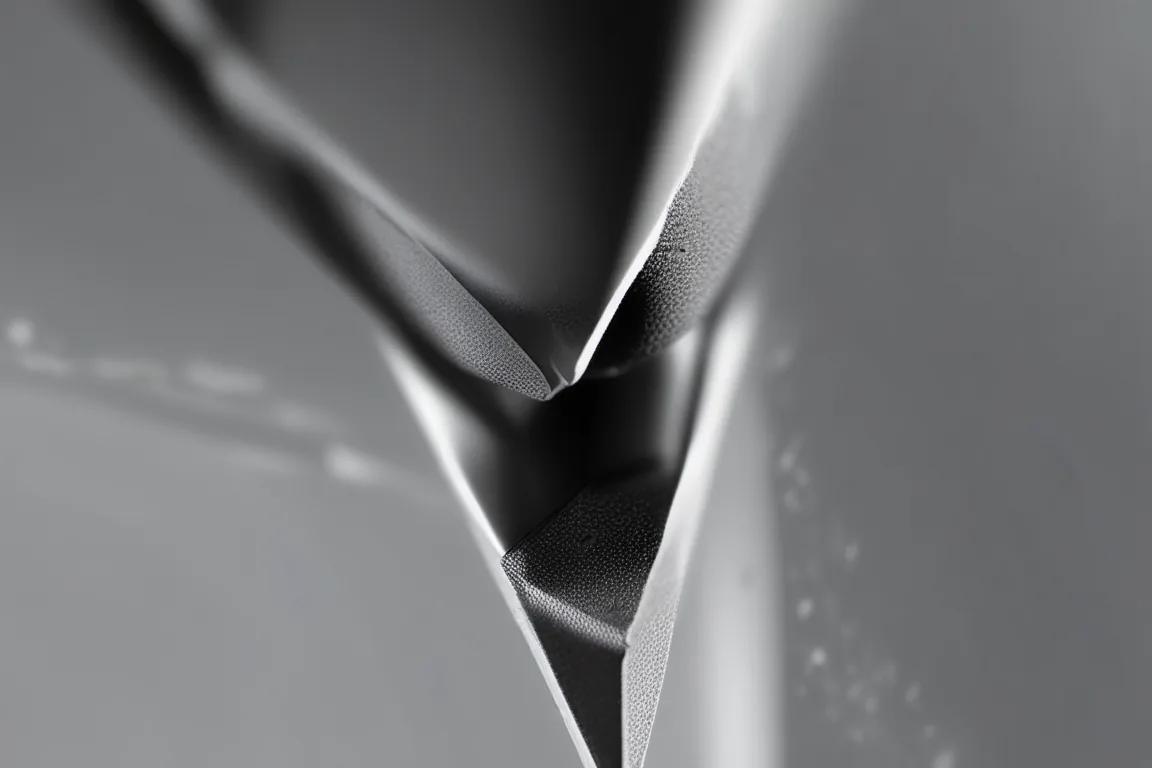
Using a left-hand rotation tool changes chip flow direction, evacuating chips towards the unclamped side of the workpiece. This prevents chip recutting and reduces heat buildup on the part surface. It also shifts cutting forces in the opposite direction compared to right-hand tools, altering spindle load and improving stability during machining operations. This is crucial for applications requiring high precision and consistency.
What this geometry controls
A left-hand tool evacuates chips towards the unclamped side of the workpiece, reducing recutting and improving surface finish. This geometry directs chip flow away from the cutting edge, reducing heat accumulation there. The 118-degree point angle distributes axial force evenly along the flute length, minimizing vibration during machining. Lower spindle speeds like 20000 rpm reduce the risk of deflection in thin walls or delicate components.
Feed rates between 50 and 100 mm/min ensure stable chip formation without overheating the cutting edge. Higher cutting speeds up to 250 m/min increase material removal rate but require precise coolant application for temperature control. Tools with an 89–93 HRC hardness resist wear better, extending tool life in continuous use. The HDC636 series fits diameters from 0.15 mm to 3.72 mm, suitable for various precision operations.
| Specification | Value |
|---|---|
| Point angle | 118 ° |
| Carbide hardness | 89–93 HRC |
| Series diameter range | 0.15–3.72 mm |
The trade-off it brings
A left-hand rotation tool reduces recutting by evacuating chips away from the cut surface, improving surface finish significantly. This geometry directs chips towards the unclamped side of the workpiece, preventing chip build-up. However, this setup increases spindle load because of altered force vectors during cutting. Higher loads can lead to faster wear on machine components and require stronger coolant flow for cooling. As a result, tool life may shorten due to increased stress concentrations at higher speeds.
Using a left-hand rotation changes the axial rake angle relative to chip evacuation direction, affecting how forces interact with the workpiece. This interaction influences cutting efficiency but also demands precise alignment of the tool axis. Misalignment can cause chatter and diminish stability in machining operations. To mitigate these effects, operators must adjust feed rates carefully according to material properties. Proper adjustment ensures consistent performance and helps maintain optimal chip control throughout the process.
Where it is the right choice
A left-hand rotation tool is ideal for machining aluminium with an 89–93 HRC carbide grade. This tool geometry directs chips away from the cutting surface, reducing recutting. Chip evacuation towards the unclamped side enhances surface finish on aluminium workpieces during high-speed milling at 25000 rpm or lower speeds. The 118-degree point angle ensures stable chip formation and breakage. Feeds of 50 mm/min to 1200 mm/min with cutting speeds between 150 m/min and 250 m/min optimize tool life and performance.
This range accommodates various aluminium machining operations effectively. Use HDC636 for optimal results in left-handed applications, where the chip flow direction is critical. Avoid substituting a right-hand tool under these conditions to prevent poor surface finish and excessive wear. Left-hand rotation tools are right suited for scenarios requiring precise chip control and minimal recutting during milling operations on aluminium parts. This specific geometry ensures efficient processing without compromising quality.
Where it is misapplied
A left-hand tool is designed for specific machining setups, such as when chips need evacuating from one side of a part. Using it in reverse of its intended direction can cause chip recutting and poor surface finish. Choosing a left-hand tool merely to match spindle rotation direction without considering chip flow leads to inefficiency. The 118° point angle ensures proper chip evacuation but only if the workpiece orientation matches. Misapplication results in chips piling up, damaging surfaces and cutting edges.
Avoiding this mistake requires understanding how material removal affects chip formation and evacuation paths. Proper tool selection balances these factors for optimal performance and durability. Incorrect use can lead to overheating and rapid wear of the 89–93 HRC carbide grade. Always verify that left-hand tools align with your machining process needs, not just spindle direction.
Frequently asked
What is left-hand rotation for carbide tools?
Left-hand rotation turns the tool counterclockwise, reversing chip evacuation direction and altering spindle load paths. It's not interchangeable with right-hand tools but serves specific machining needs.
Does HDC636 come in left-hand?
Yes, HDC636 is available in both right-hand and left-hand configurations to suit different machining directions and processes.
What rpm should I use for aluminium with HDC636?
For aluminium, use 25000 rpm for the fastest feed rates, dropping to 16000 rpm at slower speeds. Adjust according to your specific cutting parameters and material condition.