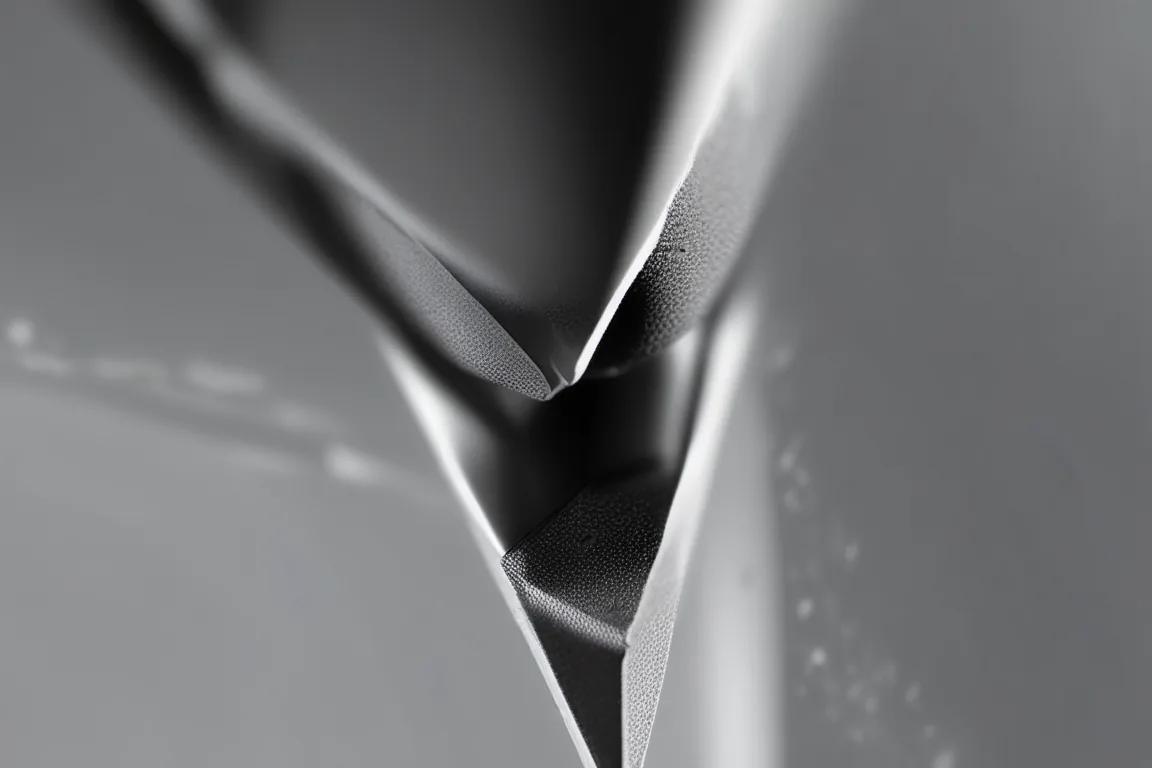
The 130-degree point angle reduces delamination and entry quality issues when cutting PCB laminate and composite stacks. This geometry shears the top layer before it is pushed, minimizing halo formation around holes. Carbide hardness ranges from 89 to 93 HRC, ensuring durability during machining operations. Tools with this design feature are ideal for precise drilling applications in electronics manufacturing. They help maintain consistent standards by reducing material deformation and improving surface finish.
What this geometry controls
The 130-degree point angle controls chip formation by shearing material layers progressively. This geometry minimizes heat generation at entry points in composite materials. A sharper angle like this requires harder carbide, typically above HRC 90 for stability.
High hardness ensures the tool remains sharp longer during cutting operations. The HDC636 series maintains an optimal balance between durability and precision. Recommended speeds range from 150 to 250 m/min depending on material properties. Feed rates vary widely within the same range, offering flexibility in different applications. This allows for controlled machining without compromising tool life or surface finish quality.
| Specification | Value |
|---|---|
| Point angle | 130 ° |
| Carbide hardness | 89–93 HRC |
| Series diameter range | 0.15–3.72 mm |
The trade-off it brings
A steeper point angle like 130 degrees reduces delamination but requires precise cutting parameters for optimal performance. Higher hardness carbide, at 93 HRC, enhances wear resistance against higher feed rates. At lower speeds of 16000 rpm with a 50 mm/min feed rate, the tool maintains entry quality while managing heat through reduced chip thickness. Increasing speed to 250 m/min minimizes material build-up on the cutting edge, extending tool life. A steeper point angle demands careful selection of cutting parameters to prevent excessive friction and overheating issues.
At 130 degrees, a feed rate below 100 mm/min ensures smooth chip formation without damaging delicate materials. Higher feed rates above 1000 mm/min require faster spindle speeds to maintain the correct chip load ratio. Slower feed rates of 50 mm/min at 25000 rpm ensure minimal layer separation in composite stacks, but reduce machining efficiency. Higher feed rates enhance productivity but necessitate optimal speed settings to avoid tool wear and poor surface finish quality.
Where it is the right choice
The HDC636 with a 130-degree point angle is ideal for PCB laminate cutting due to its controlled delamination properties. This tool reduces entry damage by shearing layers before pushing them aside. Carbide hardness in the range of 89–93 HRC ensures durability and wear resistance during prolonged use at high speeds. The recommended rpm settings are 25000, 20000, and 16000 for optimal performance on aluminium materials. For feed rates, choose between 50 mm/min to start or up to 1200 mm/min for faster production needs without compromising entry quality.
Cutting speed vc should range from 150 m/min to 250 m/min depending on the application requirements. The geometry effectively manages chip formation by progressively shearing material layers, minimizing heat generation at entry points. This controlled cutting process enhances tool life and reduces the need for frequent replacements. Using precise parameters ensures minimal delamination and superior hole quality in composite stacks. Always consult manufacturer guidelines for specific material recommendations and optimal settings.
Where it is misapplied
Using the 130-degree point angle on materials that require aggressive chip breaking can lead to inefficient machining. This geometry is less effective in removing large chips quickly compared to flatter angles. Improper selection of cutting parameters for harder carbide grades like 93 HRC can cause rapid tool wear and reduced lifespan. Optimal settings must be strictly adhered to maintain performance. Attempting to use higher speeds or feeds than recommended will deteriorate the tool faster. Using the 130-degree point angle on materials that do not benefit from controlled delamination can create unnecessary machining issues. This includes cutting metals with uniform layers, where a flatter point angle would suffice and perform better.
Ignoring the specific rpm values provided for different materials can result in poor surface finish quality. Deviating from these recommended speeds compromises the integrity of the cut material. Maintaining precise control over these parameters is crucial for achieving optimal results consistently. Choosing this geometry for applications outside its intended use, such as drilling thick metal plates, may lead to excessive burring and edge chipping. The 130-degree point angle is designed specifically for delicate materials like PCB laminate and composite stacks. Utilizing it elsewhere risks damaging both the tool and workpiece unnecessarily.
Frequently asked
What is the optimal point angle for drilling PCB laminates?
The 130-degree point angle minimizes delamination and entry quality issues by shearing the top layer before pushing it, reducing halo formation around holes.
How hard are the carbide tools used in PCB laminate drilling?
Our carbide tools have a hardness of 89 to 93 HRC, ensuring durability and wear resistance during PCB laminate and composite stack drilling operations.
What RPM should I use with an HDC636 tool for aluminium?
For aluminium drilling with HDC636 tools, optimal RPM settings range from 25000 down to 16000 depending on material thickness and desired surface finish.