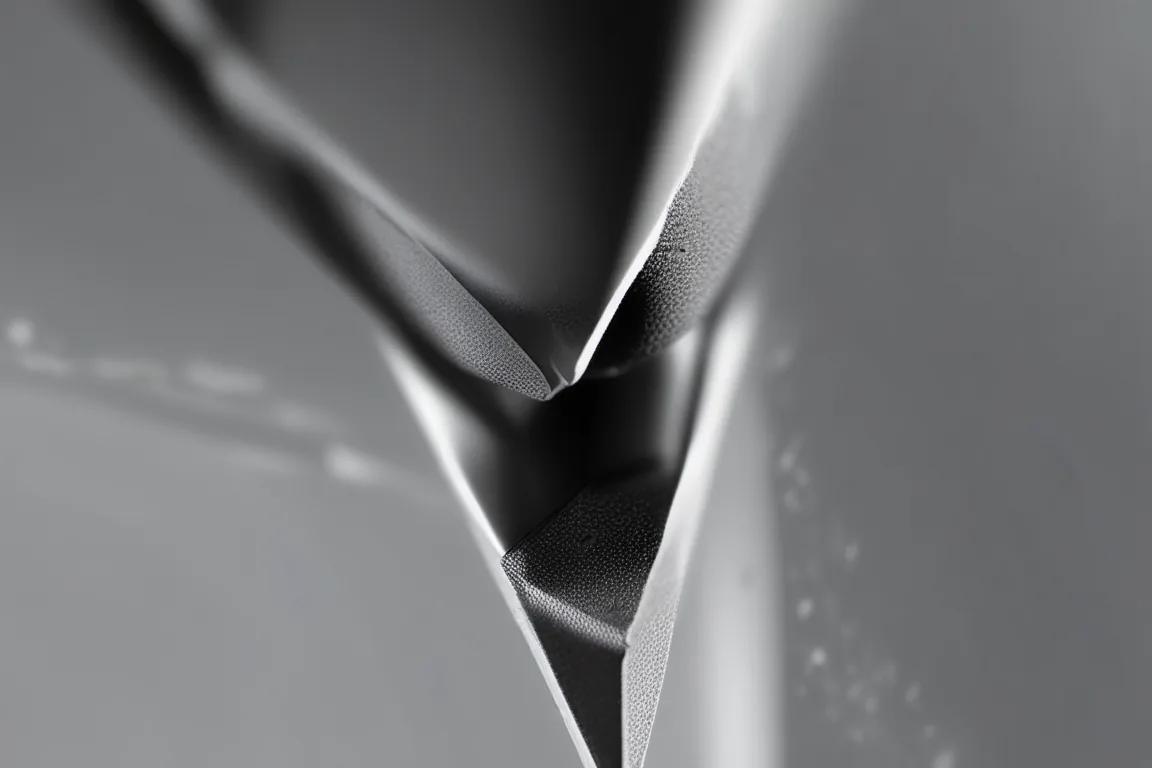
A 118-degree point angle balances strength and centring ability, suitable for various materials without excelling at any single one. This geometry performs well across steel, aluminium, and plastics with minimal adjustments needed. For carbon steel, optimal speeds range from 25000 rpm down to 15000 rpm depending on conditions. Feeds of 50 mm/min to 750 mm/min work efficiently within the recommended vc of 100–180 m/min. Tool series DC426 and DC326 exemplify this versatile geometry with hardness ratings between 89 HRC and 93 HRC.
What this geometry controls
The 118-degree point angle minimizes chip formation, reducing friction between tool and workpiece during cutting operations. Carbide hardness ranging from 89 to 93 HRC ensures durability under high-stress conditions commonly found in machining applications.
This geometry allows for consistent material removal rates across a range of materials including carbon steel without requiring frequent adjustments. Operating at speeds up to 180 m/min helps maintain optimal cutting efficiency while preserving tool integrity. Feeds from 50 mm/min to 750 mm/min accommodate different surface finishes and production volumes efficiently. The DC426 series, coated in black, provides an extra layer of wear resistance for extended tool life under challenging conditions.
| Specification | Value |
|---|---|
| Point angle | 118 ° |
| Carbide hardness | 89–93 HRC |
| Series diameter range | 0.04–3 mm |
The trade-off it brings
A 118-degree point angle offers a balanced approach for various materials but sacrifices optimal performance in any specific application. This geometry minimizes chip formation during cutting, reducing friction between tool and workpiece. Carbide's hardness range of 89 to 93 HRC ensures durability across different machining operations, though this general-purpose design may not achieve peak efficiency for hard steels or soft plastics separately. Lower rpm settings like 15000 rpm provide better stability with softer materials such as aluminium and brass.
Higher cutting speeds up to 180 m/min can enhance productivity but might increase wear on the tool edge, particularly when machining harder metals at lower feed rates of 50 mm/min. Adjusting feed rates to between 75 and 180 mm/min helps manage heat generation effectively during cutting operations with carbon steel. Despite its versatility, a 118-degree point angle requires careful parameter selection to optimize performance in specific applications. This geometry often demands more frequent tool changes compared to specialized angles designed for particular material hardnesses or machining conditions.
Where it is the right choice
Carbide with an 89–93 HRC hardness works well for standard machining across steel, aluminium, and plastics. It balances wear resistance and toughness effectively. At 25000 rpm, a feed rate of 50 mm/min is suitable for softer steels, while harder materials require slower speeds at 15000 rpm with a feed of 750 mm/min. This ensures optimal chip clearance without excessive friction.
For aluminium and plastics, the geometry minimizes chip formation, reducing wear on the cutting edge during extended operations. A point angle of 118° evenly distributes heat and pressure across the tool surface. The DC326 and DC426 part numbers reflect this versatility with their standard specifications. They are ideal for shops that handle a variety of materials without requiring specialized tools for each one.
Where it is misapplied
A 118-degree point angle is less effective for deep slotting in steel due to its weaker cutting edge. This geometry struggles to maintain sharpness under heavy cutting forces at high rpm settings. For instance, using DC326 or DC426 tools with carbon steel requires careful selection of feed and speed parameters. Feed rates must remain below 750 mm/min to prevent rapid tool wear and chipping. In contrast, a sharper point angle would better manage chip formation during deep cuts, reducing heat buildup at the cutting edge.
However, such an acute angle compromises overall durability in standard machining tasks. When machining softer materials like aluminium or plastics, this general-purpose design may still cause unnecessary friction and generate excessive chips. Adjusting feed rates to 75 mm/min can mitigate some of these issues but does not fully address them. For optimal performance across a wide range of applications, consider using alternative tools designed specifically for deep slotting in steel or for smooth chip formation in softer materials. These specialized geometries offer superior results tailored to specific machining needs.
Frequently asked
What is the right point angle for general use?
The 118-degree point angle balances strength and centring ability, suitable for steel, aluminium, and plastics. Use it when versatility outweighs material-specific needs.
DC426 tool diameter range and coating
DC426 has a diameter range of 0.04 to 3 mm with a black coating. Ideal for general-purpose cutting tasks requiring durability and corrosion resistance.
RPM settings for carbon steel with 118° point angle
For carbon steel, use 25000 rpm at high speeds or reduce to 18000 rpm or 15000 rpm for more stable operations. Adjust based on material hardness and tool size.