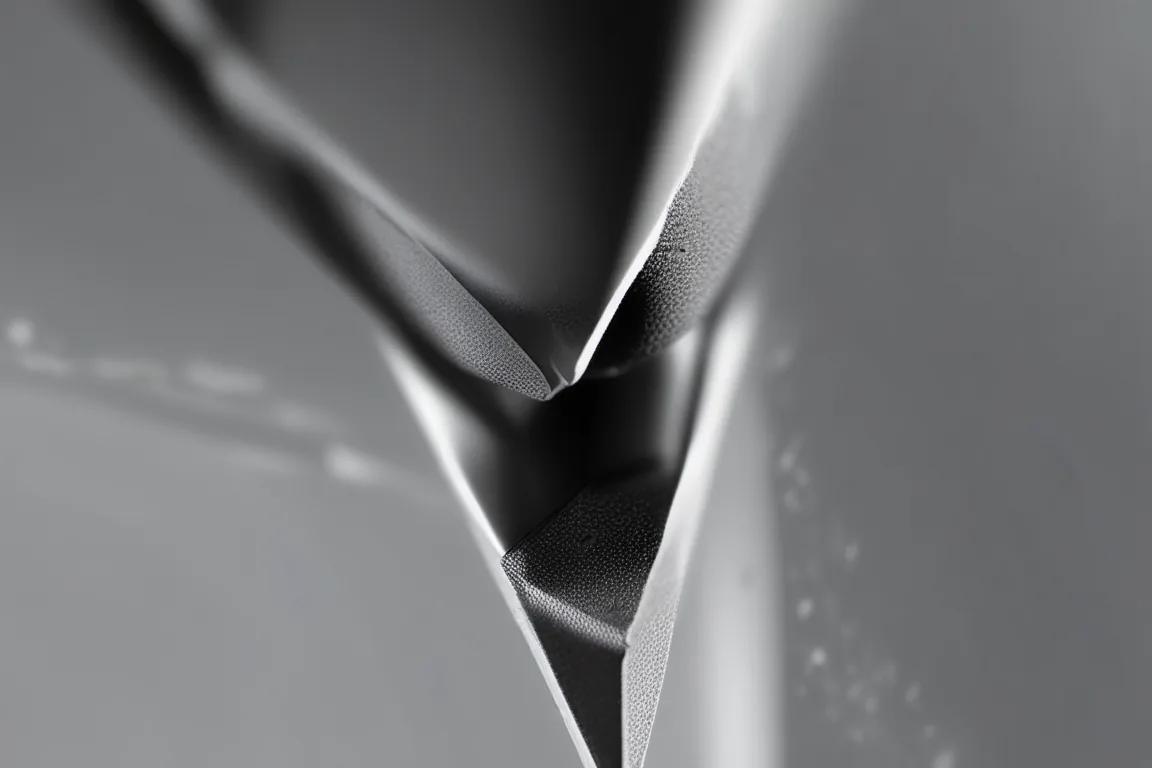
A 90-degree point minimizes deflection and ensures precise workpiece positioning during cuts, crucial for thin materials like plastics. Its short length reduces thrust forces compared to sharper points, which can push material out of alignment. This geometry suits high-rpm operations up to 25000 rpm, maintaining stability in challenging setups. The DC326L series offers uncoated tools ideal for carbon with feeds from 50 mm/min to 750 mm/min and speeds from 100 m/min to 180 m/min. These parameters ensure efficient cutting while preserving the workpiece integrity, making it suitable for intricate manufacturing tasks.
What this geometry controls
The 90-degree point geometry minimizes deflection by concentrating cutting forces at the tool tip. This concentration ensures that the carbide material, rated 89–93 HRC, can handle high thrust without deforming. Carbide's hardness resists plastic deformation under pressure, maintaining sharpness and edge integrity during cuts. Shorter point length reduces cutting resistance, allowing for smoother engagement with thin materials.
Lower feed rates of 50 mm/min or 75 mm/min prevent material displacement in plastics, ensuring accurate part positioning. Higher spindle speeds up to 25000 rpm increase surface finish quality while maintaining precision control over the cut depth. The geometry's blunt angle minimizes chip formation and eases evacuation for cleaner cutting action. This setup effectively handles thin sheet materials without compromising on tool durability or workpiece accuracy.
| Specification | Value |
|---|---|
| Point angle | 90 ° |
| Carbide hardness | 89–93 HRC |
| Series diameter range | 0.04–3.01 mm |
The trade-off it brings
A 90-degree point minimizes deflection, focusing cutting forces at the tool tip for precise workpiece positioning during cuts, ideal for thin materials like plastics. This geometry ensures high centring accuracy, essential when material displacement is critical. However, it limits machining speed due to increased friction and heat generation near the tool tip. Higher forces lead to faster wear on carbide tools, reducing their operational lifespan compared to sharper points. Therefore, operators must adjust cutting parameters like feed rate and depth of cut carefully to balance performance and longevity.
Despite its benefits in positioning accuracy, a 90-degree point requires lower machining speeds for optimal results. Slower spindle speeds reduce friction at the tool-workpiece interface, decreasing heat generation and prolonging tool life. Operators should also consider reduced chip thickness and adjust feed rates accordingly to prevent excessive wear on the cutting edge. This careful parameter selection ensures efficient material removal while maintaining carbide integrity throughout the operation. Achieving this balance is key to maximizing productivity with a 90-degree point geometry.
Where it is the right choice
A 90-degree point angle concentrates cutting forces at the tool tip, minimizing deflection for plastics and thin sheet materials. This geometry reduces material displacement during operations on soft substrates. Carbide hardness ranging from 89 to 93 HRC enhances wear resistance in these applications. Recommended spindle speeds are typically between 25000 rpm and 15000 rpm, depending on the workpiece material thickness. Feed rates should be adjusted carefully within ranges of 50 mm/min to 750 mm/min for optimal performance.
The short point length makes this geometry particularly effective in operations requiring high precision and minimal material movement. For carbon materials, cutting speeds between 100 m/min and 180 m/min are advisable, ensuring efficient chip removal without overheating. A shorter point angle also simplifies setup, reducing the risk of misalignment during machining processes. This design is especially useful in applications where workpiece stability is paramount, such as thin sheets or intricate plastic parts. Choosing the correct feed rate and spindle speed ensures consistent cutting efficiency and longer tool life.
Where it is misapplied
A 90-degree point is designed for thin materials where deflection must be minimized. Using this geometry on thick or rigid workpieces can cause unnecessary wear on the tool tip. High cutting forces in thicker materials may lead to premature failure of a blunt tool angle like 90 degrees. This reduces tool life and increases machining costs significantly.
A 90-degree point is not suitable for high-speed steel tools due to their lower hardness compared to carbide at similar operating conditions. Carbide remains the better choice for this geometry. Using a 90-degree point on materials that require large chip clearance angles will result in poor performance, as the geometry does not allow sufficient space for chips to escape efficiently. Operators should avoid using the 90-degree point when machining deep slots or pockets with limited access, as it may lead to excessive tool deflection and increased vibration.
Frequently asked
What is a 90-degree point angle for carbide tools?
A 90-degree point angle on carbide tools makes it blunt and short, ideal for plastics and thin sheets where longer points might push material out of place. It offers good centring and high thrust.
How hard are these carbide cutting tools?
Carbide cutting tools have a hardness range from 89 to 93 HRC, making them very durable and suitable for precise machining tasks requiring wear resistance.
What rpm should I use with DC326L tools?
For DC326L tools, recommended spindle speeds are 25000 rpm for carbon materials down to 15000 rpm. Adjust according to material thickness and type to ensure optimal performance and tool life.