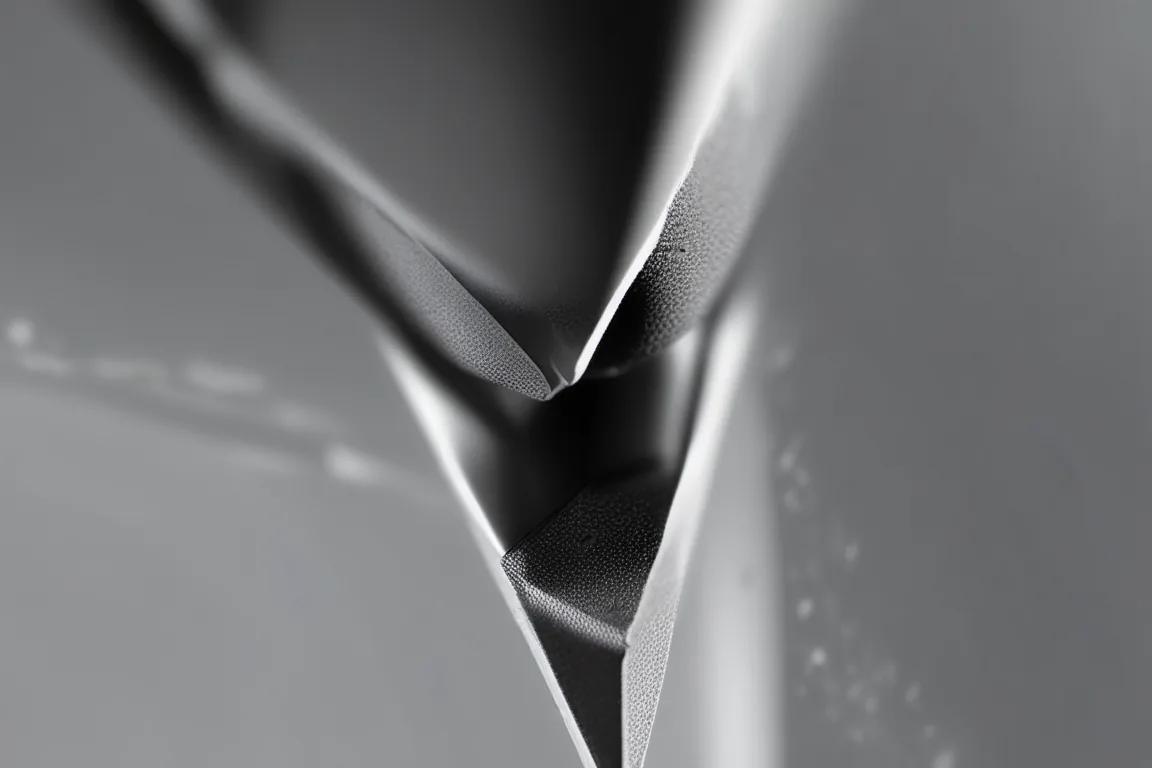
The 160-degree point minimizes delamination and exit burr on thin, delicate materials by spreading cutting forces over a wide area. This geometry reduces thrust concentration, making it ideal for precision work where chip formation control is critical. Hardened to 89–93 HRC, the carbide HDC636 series maintains strength while accommodating high feed rates up to 1200 mm/min without wear. Designed specifically for aluminium, these tools enable stable machining at speeds from 150 to 250 m/min with minimal material damage. This precision ensures consistent part quality and extends tool life in demanding applications.
What this geometry controls
The 160-degree point angle spreads cutting forces over a larger area compared to sharper points. This minimizes stress concentrations that could cause material failure during drilling. Carbide hardness between 89 HRC and 93 HRC ensures durability against wear and tear from continuous use. The wider entry form reduces the risk of edge chipping on thin materials. Lower rotational speeds such as 16000 rpm reduce thrust forces, further minimizing delamination risks in fragile substrates.
A feed rate of 50 mm/min allows controlled material removal without overheating the tool. The reduced point angle creates a shallower cut when entering the workpiece, distributing cutting pressure over more surface area. This helps maintain structural integrity near entry and exit points on delicate materials. A wider point minimizes axial forces acting on the drill during engagement, reducing the risk of deflection in less rigid setups. The geometry's design effectively counters issues related to material thinness and brittleness during machining operations.
| Specification | Value |
|---|---|
| Point angle | 160 ° |
| Carbide hardness | 89–93 HRC |
| Series diameter range | 0.15–3.72 mm |
The trade-off it brings
A wider point angle means reduced cutting edge length compared to sharper geometries. This shorter length limits chip formation and evacuation capacity in thicker materials. At higher speeds like 25000 rpm with 150 m/min feed rate, wear increases due to concentrated forces on the smaller edge area. Lower speeds such as 16000 rpm at 250 m/min allow better force distribution but reduce efficiency for tough materials. A wider point angle also requires a slower cutting speed and higher feed rates to maintain stable cutting conditions.
This trade-off sacrifices material removal rate, impacting productivity in production environments. Slower feeds mean longer machining times per part, increasing overall costs. However, the 160-degree point geometry remains advantageous for thin materials where delamination is critical. It ensures better surface finish and prolongs tool life by reducing edge impact stress on delicate substrates.
Where it is the right choice
The 160-degree point is ideal for aluminium and similar soft, thin materials. It prevents delamination during cutting by spreading forces widely. Carbide at 89–93 HRC provides durability without excessive hardness that could increase brittleness. This range optimizes wear resistance and toughness together. Higher spindle speeds up to 25000 rpm reduce chip thickness, improving surface finish.
Lower feed rates like 50 mm/min enhance tool life by minimizing heat generation. At vc of 150–250 m/min, the geometry reduces cutting forces compared to sharper points. This helps maintain accuracy on thin sheets prone to deformation. The HDC636 series uses this angle for applications needing precise entry and exit without burrs or marks. It excels in operations demanding minimal stress on delicate parts.
Where it is misapplied
The 160-degree point is unsuitable for materials harder than HRC 93. This range limits its use to soft metals like aluminium and brass. Carbide hardness above this level risks overworking the tool material, which leads to premature wear. Use of this geometry on steels or other hard alloys can lead to rapid edge dulling. Such applications require sharper geometries with more cutting edge length for effective chip breaking.
Avoid using 160-degree points at speeds outside 150 to 250 m/min. These limits ensure optimal performance in soft, thin materials. Slower speeds may cause excessive heat buildup and work hardening of the material being cut. Faster speeds can result in loss of dimensional accuracy due to chatter or poor surface finish. Always consult cutting data for proper speed selection specific to your material type.
Frequently asked
What is the point angle for the HDC636?
The HDC636 has a 160° point angle, which spreads thrust over a wider area, reducing delamination and improving exit quality in materials like aluminium.
When should I use an aluminum drill with 160-degree point geometry?
Use a 160-degree point angle for drilling aluminium when you need to minimise delamination at entry or maintain exit surface finish. Optimal RPM ranges from 25,000 to 16,000 depending on material hardness.
What are the optimal cutting speeds and feeds for HDC636 drills in aluminium?
For aluminium, use the HDC636 with vc between 150-250 m/min and feed rates of 50 mm/min or higher. Adjust RPM from 25,000 down to 16,000 based on material thickness and surface finish requirements.