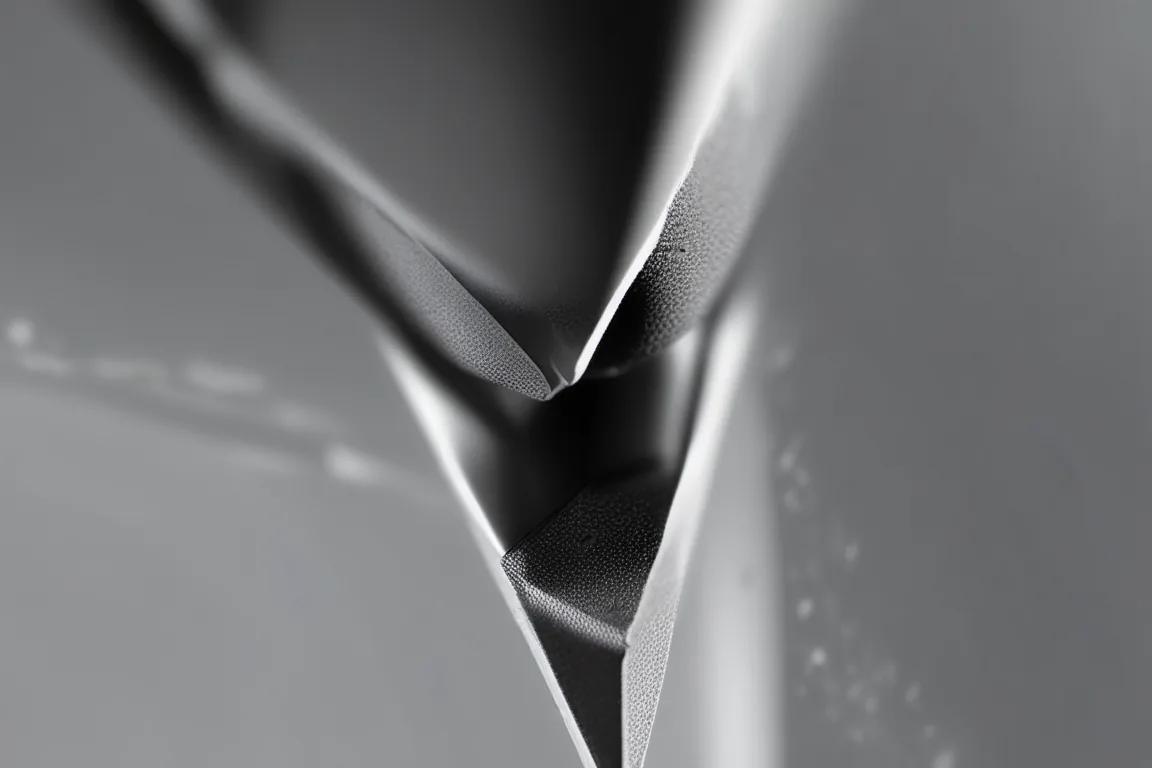
DC326 drills have a narrow margin designed for precise hole placement, reducing wandering and improving accuracy during drilling operations. This geometry minimizes contact with the hole wall, lowering friction but requiring careful alignment. The DC326’s 118-degree point angle optimizes cutting forces, balancing stability and precision. Narrow margins enhance surface finish by limiting debris buildup at the drill tip. Users must ensure proper toolholder fit to maintain accuracy benefits.
What this geometry controls
The margin width on DC326 drills controls how much the tool rubs against the hole wall during cutting. This rubbing stabilizes the drill, reducing positional errors as it cuts through aluminium. A narrower margin allows for freer movement but risks imprecise drilling. Wide margins increase friction and can wear down the uncoated carbide faster. DC326's narrow design balances accuracy with wear resistance in hard materials.
The 118-degree point angle ensures consistent cutting forces, guiding the drill bit. This geometry minimizes vibration during high-rpm operations at speeds up to 25000 rpm. At lower speeds of 16000 rpm, the margin width still maintains hole accuracy. Feed rates from 100 mm/min to 1200 mm/min affect how much material is removed. High feed rates require careful control to prevent tool wear and maintain precision.
| Specification | Value |
|---|---|
| Point angle | 118 ° |
| Carbide hardness | 89–93 HRC |
| Series diameter range | 0.04–3.17 mm |
The trade-off it brings
A wider margin on DC326 drills increases wall contact, stabilizing the tool for consistent hole placement at higher speeds and feeds. This stability reduces positional errors, critical for precise drilling applications. However, this increased stability comes with a trade-off: more friction against the wall leads to faster wear and reduced cutting efficiency. Narrower margins allow the drill to cut more freely with less contact, minimizing wear but potentially increasing wandering and reducing hole accuracy. Choosing between these options depends on whether precision or tool longevity is the primary concern in specific drilling conditions.
A narrow margin reduces rubbing against the hole walls, allowing for faster feed rates without excessive friction. This setup enhances cutting efficiency by minimizing heat generation and extending tool life during operations. However, reduced wall contact means less positional stability, which can lead to increased wandering of the drill bit when high precision is needed. For applications requiring exact hole placement, a wider margin offers better guidance despite slower cutting speeds and higher wear rates. Thus, selecting the appropriate margin width balances between optimal drilling efficiency and necessary precision for specific workpiece requirements.
Where it is the right choice
DC326 drills are ideal for aluminium where precise hole placement is critical. Hardness ranges from 89 to 93 HRC, ensuring durability during machining. At lower speeds of 16000 rpm, DC326 provides stable drilling with a narrow margin. Higher feed rates like 1200 mm/min demand narrower margins for accuracy. For applications requiring high precision at 250 m/min cutting speed, the 118° point angle minimizes vibration.
This geometry reduces chatter and enhances surface finish quality. Slower speeds of 20000 rpm allow a margin that balances stability and accuracy. Narrow margins on DC326 drills ensure minimal wear over extended use in aluminium drilling operations. Consistent hole placement is crucial for tight-tolerance assemblies, where DC326 excels under specified cutting parameters.
Where it is misapplied
Choosing a wide margin for DC326 drills in applications where surface finish is more critical than hole placement can lead to increased friction against the wall. This extra contact causes rapid wear on the tool edges due to continuous rubbing against the material. Surface finish deteriorates as the drill becomes less efficient at removing chips cleanly from the cut area. Additionally, using a wide margin under these conditions generates excessive heat, reducing tool life and increasing risk of workpiece distortion. For operations prioritizing surface quality over precise hole location, selecting a narrower margin is more appropriate to minimize wall contact and enhance cutting efficiency.
In applications where the DC326 drill operates at lower speeds and feeds compared to its optimal range, maintaining a wide margin can result in inefficient chip formation and evacuation. The reduced cutting forces do not fully utilize the tool’s designed geometry for optimal performance. Consequently, this leads to poor surface finish due to inadequate material removal rates and ineffective chip control. Lower speed and feed settings also increase cycle time unnecessarily without providing additional machining benefits. Therefore, adjusting to a narrower margin under these conditions enhances chip clearance and improves overall cutting efficiency.
Frequently asked
What is the right margin width for drilling accuracy?
A wide margin provides better guidance and reduces wandering but increases friction. A narrow margin allows freer cutting but may lead to less precise hole positioning. Choose based on whether you need more accurate placement or smoother finishes.
How does point angle affect drill performance in carbide tools?
The 118° point angle balances wear resistance and chip evacuation, making it suitable for a wide range of materials including aluminium. Adjusting the angle can optimize drilling efficiency and tool life according to material hardness.
What are the recommended RPM settings for DC326 drills in aluminium?
For DC326 carbide drills, use 25000 rpm for optimal performance in aluminium, reducing to 20000 or 16000 rpm as needed. Adjust based on specific cutting conditions and tool wear requirements.