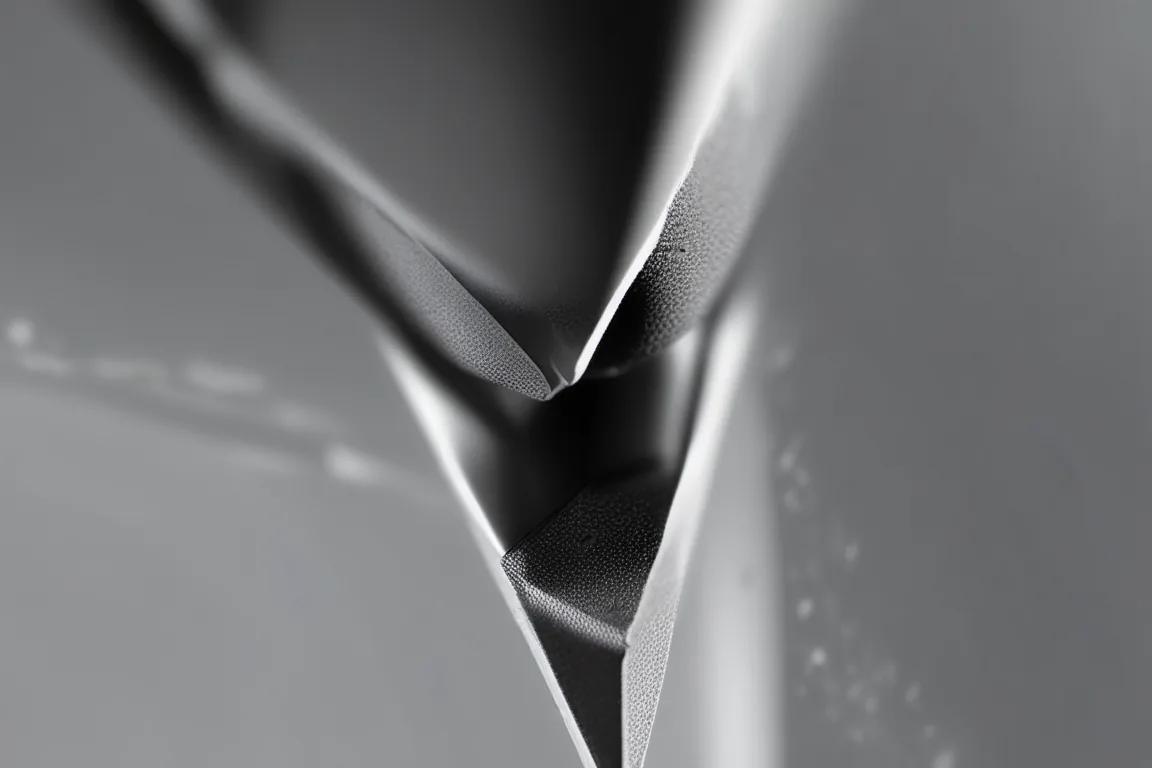
A higher helix angle evacuates chips faster, crucial for deep micro holes where chip packing can damage tools and workpieces. In small hole drilling with DC426L carbide tools, a 15-degree helix helps maintain optimal chip flow without compromising tool strength excessively. This balance enhances machining stability at high speeds like 15000 rpm, reducing the risk of poor surface finish or tool breakage.
What this geometry controls
A higher helix angle evacuates chips faster, reducing chip packing and heat buildup in small holes. This reduces friction between the tool and workpiece, improving cutting efficiency. Chip evacuation prevents work hardening of stainless steel, maintaining material consistency throughout machining. The DC426L series uses a 118-degree point angle for optimal chip formation.
Smaller diameters like 0.04 mm require higher spindle speeds up to 15000 rpm for effective chip control. Reduced friction extends tool life and maintains dimensional accuracy in small holes. Lower helix angles increase rigidity but can lead to poor chip evacuation, especially in deep holes. The DC426L series balances these factors with its black coating, enhancing wear resistance at higher cutting speeds up to 120 m/min.
| Specification | Value |
|---|---|
| Point angle | 118 ° |
| Carbide hardness | 89–93 HRC |
| Series diameter range | 0.04–3 mm |
The trade-off it brings
A higher helix angle evacuates chips more efficiently, reducing friction and heat buildup between tool and workpiece. This minimizes wear on both materials during cutting operations. However, it also reduces axial stiffness of the drill due to its design characteristics. Lower axial stiffness means less resistance against vibrations, potentially increasing tool chatter risk. Despite this, a higher helix angle remains preferred for deep micro holes where chip evacuation is critical.
Choosing a lower helix angle enhances axial rigidity but slows chip removal. This can lead to increased friction and higher temperatures near the cutting edge. Higher temperatures accelerate wear on carbide tools over time. Slower chip clearance also risks chip packing, which may cause tool breakage in tight spaces. Therefore, selecting an optimal helix angle balances evacuation needs with mechanical stability requirements.
Where it is the right choice
DC426L is ideal for drilling small holes in hardened stainless steel with high precision requirements. Its hardness range from 89 to 93 HRC ensures durability against wear. The tool's 15000 rpm speed at low feed rates efficiently removes chips, preventing damage from chip packing. At higher feeds up to 150 mm/min, reduced speeds like 7000 rpm ensure smooth operation without overheating. A point angle of 118 degrees optimizes cutting action in stainless steel, minimizing tool deflection and chatter.
This geometry supports stable cutting at medium speeds around 60 m/min for optimal performance. Deep micro holes benefit from DC426L's higher helix angle, enhancing chip evacuation despite reduced rigidity. In these applications, a lower feed rate of 30 mm/min paired with 5000 rpm maximizes tool life and hole quality. Using DC426L in small diameter operations requires careful selection of cutting parameters to balance evacuating chips and maintaining tool strength. Proper setup minimizes friction and heat buildup, preserving both the workpiece and drill integrity.
Where it is misapplied
A higher helix angle can compromise tool rigidity when used in shallow holes or non-hardened materials. This reduces the effective cutting edge support and increases vibration risk.
In such applications, a lower helix angle provides better stability and longer tool life. It ensures optimal chip control even with slower evacuation rates. Choose DC426L for deep hardened stainless steel where heat buildup is critical. For softer steels or shallower holes, select tools with reduced helix angles. This approach maximizes overall performance across different drilling scenarios.
Frequently asked
What is the right helix angle for small holes?
For small holes, use a higher helix angle to improve chip evacuation despite reduced rigidity. This prevents chip packing and improves tool life.
How does the DC426L handle stainless steel?
DC426L performs well in stainless steel with recommended speeds of 15000 rpm down to 7000 rpm, feeds from 30 mm/min up to 150 mm/min, and cutting speeds between 60 to 120 m/min.
Why is the point angle important for micro holes?
A 118° point angle balances strength and chip evacuation in small diameters. It minimises friction while ensuring chips exit easily, crucial for maintaining tool life in tight spaces.