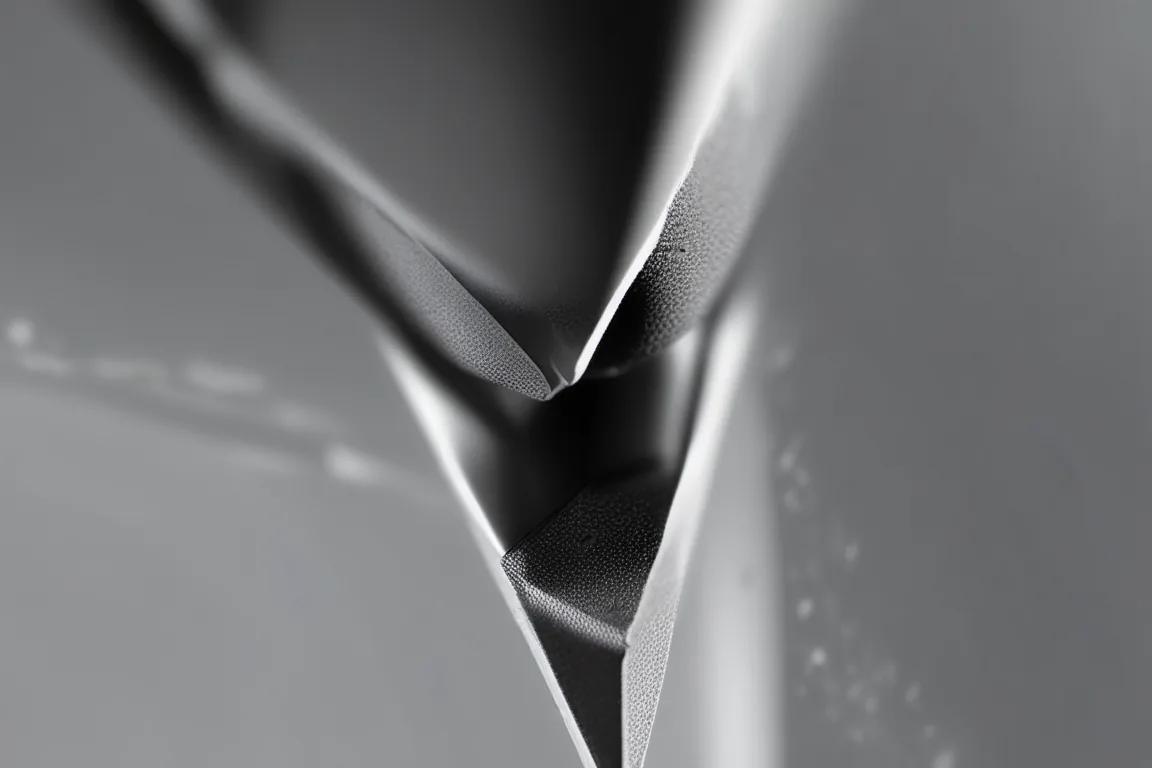
A 150-degree point angle on DC826 tools ensures efficient shearing of brittle and hard materials. This geometry minimizes chip formation, reducing stress concentration at entry points. Supported by a robust carbide substrate rated between 89 to 93 HRC, it handles high forces without breaking. Ideal for large diameters from 0.13 mm up to 10.3 mm, this tool cuts carbon effectively at speeds like 25000 rpm and feed rates of 75 mm/min. These parameters optimize cutting efficiency while maintaining structural integrity under demanding conditions.
What this geometry controls
The 150-degree point angle on DC826 tools creates a sharp edge that efficiently shears through brittle materials like cast iron.
This geometry directs forces away from the cutting edge, reducing wear on the carbide tip during machining operations. Harder HRC ratings in this range offer superior resistance to deformation and abrasion under high pressure.
| Specification | Value |
|---|---|
| Point angle | 150 ° |
| Carbide hardness | 89–93 HRC |
| Series diameter range | 0.13–10.3 mm |
The trade-off it brings
The 150-degree point angle on DC826 tools provides a sharp cutting edge that minimizes chip formation in brittle materials like cast iron. This geometry reduces thrust forces by directing cutting action along a narrow path, allowing for higher speeds and feeds without excessive wear. However, the long point is fragile and prone to breakage at smaller diameters due to reduced material support around it. At larger diameters, this issue diminishes as more material stabilizes the cutting edge.
Despite its fragility, the 150-degree angle offers superior surface finish in hard materials by efficiently shearing chips rather than pushing them through friction. This results in less heat generation and longer tool life compared to a wider point angle. Yet, operators must carefully select cutting parameters to prevent excessive vibration or chatter that can quickly damage this geometry.
Where it is the right choice
DC826 tools with a 150-degree point angle excel in machining materials that require precise shearing, such as hardened steels up to HRC 93 hardness. This geometry minimizes tool wear by reducing friction between the cutting edge and material surface during operation at high speeds of 180 m/min. For optimal performance, use DC826 with a feed rate of 75 mm/min when machining materials harder than HRC 89.
This reduces built-up edge formation on the tool's flank. Lower hardness materials like cast iron can be processed effectively using DC826 at slower speeds down to 100 m/min, ensuring longer tool life and better surface finish quality. When selecting DC826 for machining applications, ensure that workpiece material thickness supports the long point geometry to prevent breakage during operation.
Where it is misapplied
Using a 150-degree point angle on DC826 tools for machining ductile materials can lead to rapid wear and inefficient chip control. The long, thin cutting edge is prone to breakage when encountering softer metals or alloys that deform easily under pressure rather than shear cleanly. For applications requiring high feed rates beyond the recommended 750 mm/min, a shorter point angle offers better durability against excessive forces and vibrations.
Selecting this geometry for materials with hardness below HRC 89 may result in premature edge dulling due to insufficient support from the material's structure. Operators should avoid using DC826 tools on thin-walled or fragile parts where the long reach of the cutting point can cause deflection and unintended deformation.
Frequently asked
What is the point angle for DC826?
DC826 has a 150-degree point angle, suitable for brittle and hard materials where shearing entry points is crucial. This geometry works well at high speeds up to 180 m/min.
When should I use 150° geometry?
Use 150° geometry for materials that are difficult to push through, such as brittle or hard metals. It provides a sharp cutting edge but requires careful handling due to its fragility, especially at smaller diameters.
What rpm and feed rates work right with DC826?
For DC826, optimal speeds range from 15000 to 25000 rpm depending on material hardness. Feeds should be adjusted between 50 mm/min for softer materials and up to 750 mm/min for harder ones to ensure effective cutting without damaging the tool.