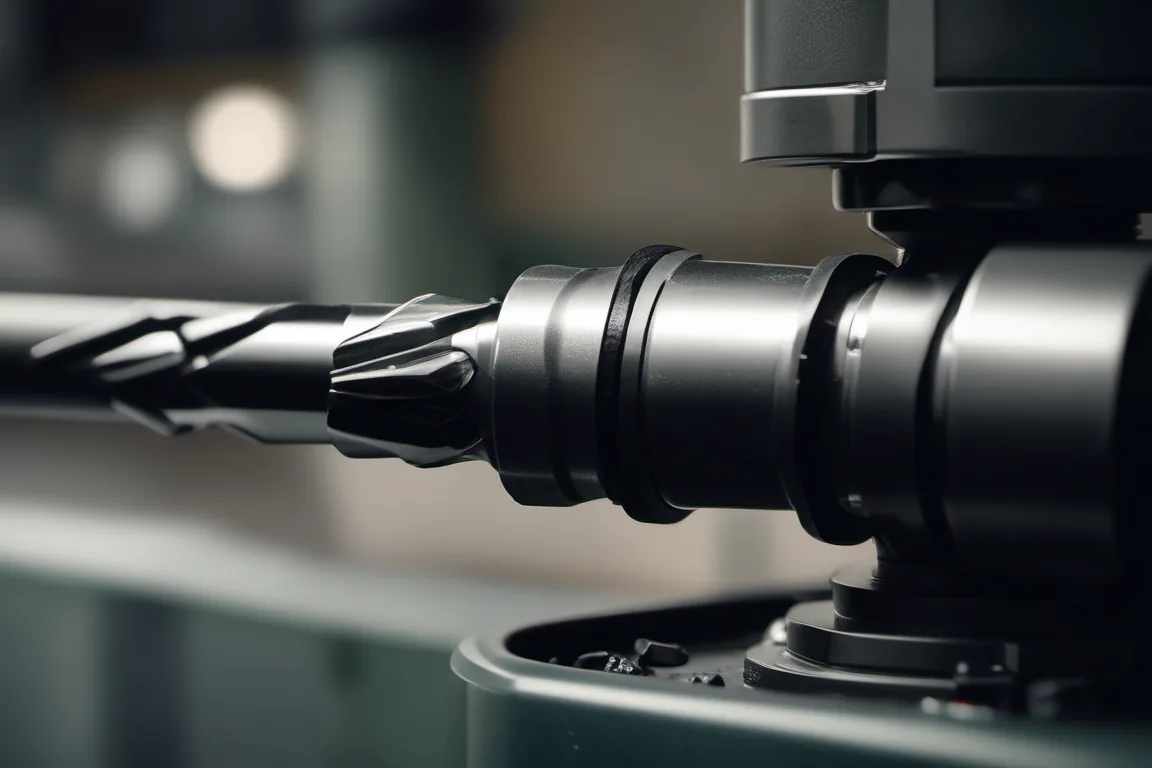
In hard materials above HRC 40, standard carbide tools wear out quickly at high speeds due to deformation and heat buildup. DC836 series tools with bronze coating can operate effectively at 70 m/min without significant edge damage or loss of cutting accuracy. This performance allows for longer tool life and consistent part quality even when machining demanding materials like hardened steels. The bronze coating enhances wear resistance, enabling higher feed rates up to 100 mm/min while maintaining stability.
The variable and the range it can take
Cutting speed defines how fast the tool moves relative to the workpiece surface, measured in meters per minute (m/min). It ranges from 70 m/min for very hard materials down to 130 m/min for less challenging conditions. Speed must stay within this range to prevent excessive heat and deformation of the cutting edge. At lower speeds, wear is reduced but machining time increases significantly. Higher speeds can reduce processing times but risk damaging the tool through overheating.
The DC836 series tools are designed with a 140-degree point angle for optimal chip control in hard materials. A bronze coating enhances durability and heat resistance against high cutting forces. Proper selection of feed rates and depths of cut ensures efficient use across the entire speed range. For micro-machining, feed per tooth ranges from 0.005 to 0.02 mm/tooth while depth of cut is between 0.01 and 0.05 mm. General machining uses larger values: up to 0.08 mm/tooth for feed rate and 0.5 mm for depth of cut.
| Specification | Value |
|---|---|
| Point angle | 140 ° |
| Carbide hardness | 89–93 HRC |
| Series diameter range | 0.1–14 mm |
What it changes in the cut
Reducing cutting speed decreases force on the tool edge. Lower speeds mean less deformation under heavy loads, extending wear resistance at high hardness levels. Lower temperatures result from slower cutting speeds in hard materials. Slower movement means reduced friction and heat generation, maintaining sharper edges longer during machining operations. Slower speeds produce thicker chips in tough alloys above HRC 40.
Thicker chips carry more material away efficiently without overheating or tool wear issues. Increased feed rates compensate for lower cutting speed effects. More material removal per tooth pass ensures productivity remains high despite slower overall movement. This balance between speed and feed optimizes the DC836 series use. It enables reliable machining in demanding conditions where standard tools fail prematurely due to heat and deformation.
Where the limit comes from
Carbide hardness ranges from 89 to 93 HRC, making it highly resistant against wear and deformation. High cutting speeds generate significant heat at these hardness levels, accelerating tool wear. Speeds must stay below 130 m/min for alloy steels to prevent excessive edge temperature rise. This limit balances between maintaining sharpness and managing heat dissipation effectively. Tool geometry with a 140-degree point angle helps distribute forces evenly under stress. Machine rigidity also plays a role in determining the practical cutting speed range.
Stiffer machines can handle higher speeds without compromising accuracy or tool life. Lower stiffness requires slower speeds to avoid vibration issues, which damage tools faster. Common feed rates of 0.02 to 0.08 mm per tooth keep deformation manageable at these high hardnesses. The optimal depth of cut ranges from 0.1 to 0.5 mm to maintain edge integrity during machining. Adjusting parameters ensures the process remains within tool capability limits.
Setting it in practice
Start with the lowest cutting speed if material hardness is near 93 HRC. Lower speeds reduce wear and deformation risk when machining hard materials. Begin with a feed rate of 40 mm/min for softer alloys, increasing gradually to 100 mm/min for harder ones. Monitor tool edge condition closely during initial holes; signs like chipping or edge rounding indicate adjustments are needed. Decrease speed and increase depth of cut if signs of excessive wear appear early in the process.
Adjust feed rate based on surface finish requirements and material type. For finer finishes, use a lower feed setting within 0.02 mm/tooth range. For general machining, a higher feed of up to 0.08 mm/tooth can be used safely. Depth of cut should not exceed 0.5 mm for maximum tool life in hard materials. Regularly check cutting parameters and adjust as necessary to maintain optimal performance throughout the job.
Frequently asked
What is the recommended cutting speed for HRC 50 material?
For materials above HRC 40, use lower speeds to prevent tool deformation. Optimal rpm ranges are 20000, 13000, and 9000 with vc between 70 and 130 m/min depending on the hardness.
What feed rate should I use for hard materials?
Use lower feed rates for HRC 40+ materials to avoid damaging the tool. Recommended feeds are 40 mm/min for micro cuts, increasing up to 270 mm/min for general applications as material hardness decreases.
Can DC836 handle HRC 90 material?
DC836 with a bronze coating can cut through very hard materials like those at HRC 90. Ensure you use the correct rpm settings of 20000, 13000 or 9000 and appropriate vc between 70 to 130 m/min for optimal performance.