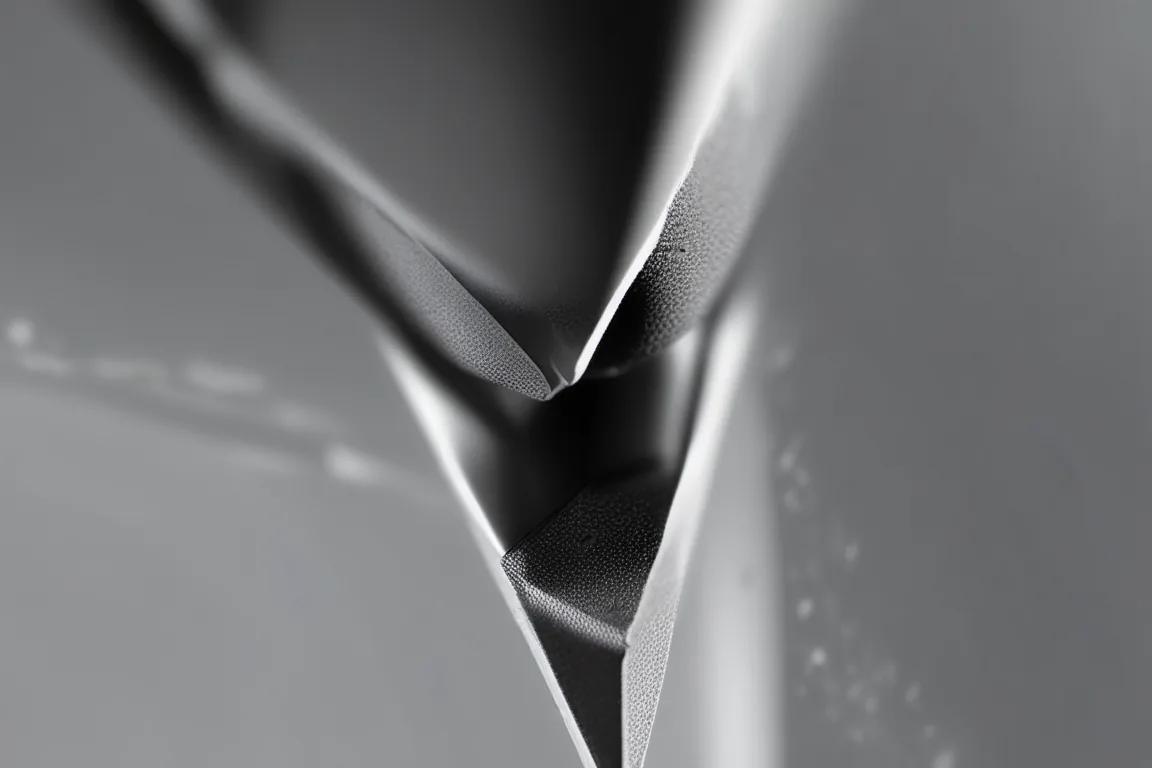
The DC836 series uses a sharp edge for high-impact operations, ensuring efficient chip removal and clean cuts. Its hardness range of 89–93 HRC prevents deformation under heavy loads. Sharp edges on tools like the DC836 require precise geometry to avoid chipping. The 140° point angle minimizes contact area, reducing friction and wear during cutting. This design choice maximizes tool life in demanding applications.
What this geometry controls
A sharp edge on DC836 tools reduces friction between the tool and workpiece by concentrating cutting forces at a single point.
This concentration minimizes deformation in materials softer than the carbide's 89–93 HRC hardness range, improving surface finish quality.
| Specification | Value |
|---|---|
| Point angle | 140 ° |
| Carbide hardness | 89–93 HRC |
| Series diameter range | 0.1–14 mm |
The trade-off it brings
The sharp edge on DC836 tools minimizes friction by focusing cutting forces at a single point, enhancing chip removal efficiency and cut quality. This design choice requires careful management of impact loads to prevent chipping. High hardness from 89–93 HRC supports this approach by resisting wear during aggressive cuts. However, sharp edges can suffer premature failure under excessive vibration or inconsistent feed rates. To mitigate these risks, operators must maintain optimal cutting parameters and tool condition for longevity.
A honed edge provides a compromise between durability and performance in less demanding conditions. It spreads the cutting force over a broader area compared to a sharp edge, reducing the risk of chipping during operations with lower impact loads. Despite this advantage, the reduced point angle on DC836 tools means that honing compromises some precision and surface finish quality. This trade-off also affects tool life; while it extends durability against wear, it may not fully utilize the material's hardness potential for maximum efficiency in high-impact applications.
Where it is the right choice
For high-impact operations, DC836 uses a sharp edge with an 89–93 HRC hardness for efficient chip removal and clean cuts. Sharp edges concentrate cutting forces at one point, reducing friction between tool and workpiece. This minimizes wear and extends tool life in tough applications. A honed edge would not withstand the impact loads of these operations without chipping or breaking.
The sharp geometry ensures reliable performance under extreme conditions. The 140-degree point angle further aids in high-impact cutting by directing chip flow away from the workpiece surface. This design prevents built-up edge formation and maintains cut quality throughout use. Overall, DC836 excels in heavy-duty machining tasks where a robust sharp edge is crucial for optimal performance and durability.
Where it is misapplied
A sharp edge on DC836 tools is designed for high-impact operations where rapid chip clearance is essential. This design ensures efficient cutting without compromising tool durability under heavy loads. However, using a sharp edge in low-impact operations can lead to premature wear and chipping due to reduced stress concentration areas. In such cases, the honed or chamfered edges provide better resistance against rubbing and wear. A honed edge on DC836 tools distributes cutting forces more evenly across its surface, reducing localized stresses that cause chipping in gentler machining scenarios.
This distribution helps maintain tool integrity over longer periods. Choosing a sharp edge for operations with low impact loads can result in excessive friction between the workpiece and tool, which leads to rapid wear and decreased tool life. Operators should opt for honed or chamfered edges when working on materials that require less aggressive cutting actions. For instance, applications involving thin-walled parts benefit from a honed edge because it prevents deformation caused by high localized pressures at the cut entry point. This approach preserves part geometry and ensures consistent quality during machining processes.
Frequently asked
What is the difference between sharp, honed, and chamfered edges?
A sharp edge cuts cleanly but chips easily under impact loads. A honed edge resists chipping better but may rub more. Chamfering adds durability for high-load operations.
Which edge type should I choose for my operation?
Select a sharp edge for light cutting with low impact loads, and a honed or chamfered edge for tougher cuts where durability is crucial. Consider the hardness of your carbide tool (89–93 HRC).
Can you provide an example part number for these edges?
The DC836 series offers tools in various diameters from 0.1 to 14 mm with a bronze coating, suitable for different edge preparations like sharp, honed, or chamfered.