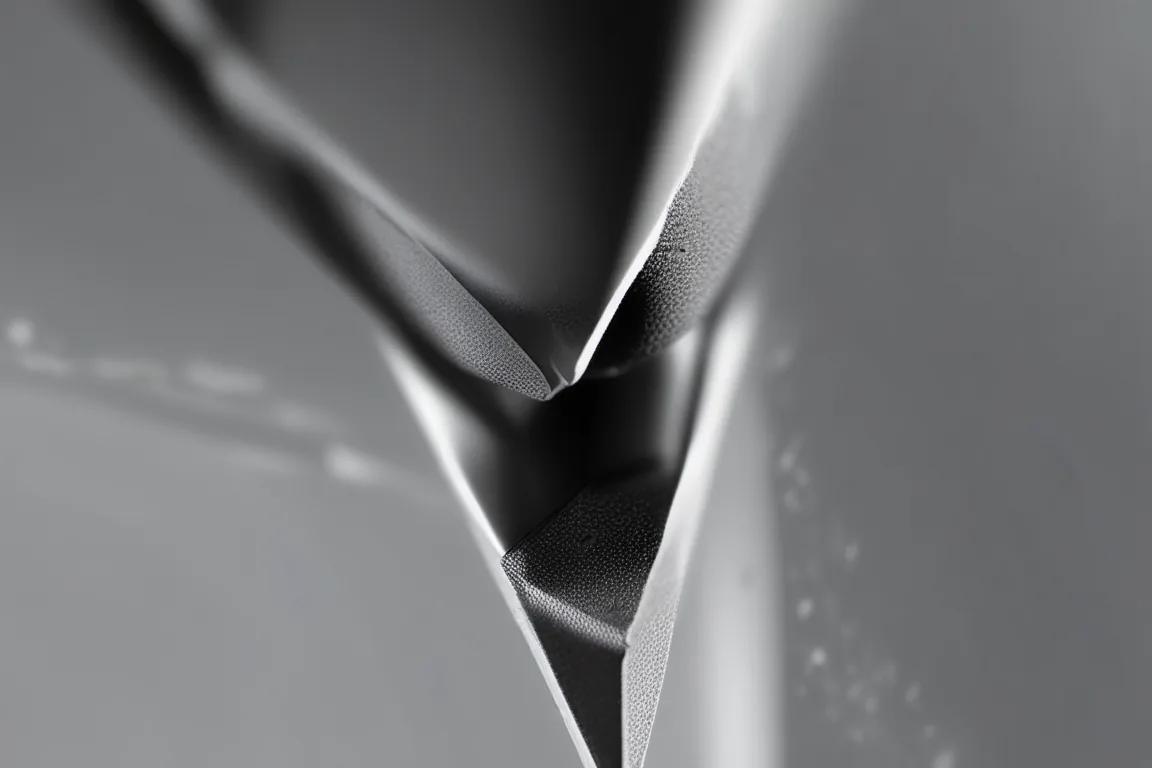
A 135-degree point angle on carbide drills reduces thrust, aiding machining of hardened materials or long-reach setups. This geometry shortens the chisel edge, enhancing chip evacuation and reducing friction. It demands precise toolholding to prevent damage at high speeds. Positive feed is essential for stable cutting, ensuring consistent material removal rates. The DC426 series offers this configuration across a range from 0.04 mm to 3 mm diameter.
What this geometry controls
A 135-degree point angle reduces thrust on carbide drills by shortening the chisel edge length. This minimises deflection in long-reach or hard material drilling operations. Thrust reduction allows for more stable machining at higher feed rates, improving surface finish and tool life. The shorter chisel edge requires less force to penetrate the workpiece material initially. The drill's geometry directs chip flow away from the cutting edges efficiently, reducing friction and wear during operation.
This design helps maintain consistent cutting performance over extended periods. With a 135-degree point angle, the carbide drill can handle higher axial loads compared to standard geometries without excessive deformation or breakage risks. It ensures reliable drilling even in challenging conditions where rigidity is compromised. The reduced contact area between the chisel edge and workpiece means less heat generation at the cutting zone, enhancing tool durability and prolonging service life during extended machining cycles.
| Specification | Value |
|---|---|
| Point angle | 135 ° |
| Diameter | 1 mm |
| Carbide hardness | 89–93 HRC |
| Series diameter range | 0.04–3 mm |
The trade-off it brings
A 135-degree point angle reduces thrust but makes the drill more susceptible to wear and breakage. This vulnerability requires a rigid setup with positive feeds. Positive feed rates prevent excessive wear, extending tool life while maintaining cutting efficiency. A rigid setup ensures stable drilling without deflection or chatter issues. Reduced chisel edge length in a 135-degree point means less material contact at the start of a cut.
Less contact reduces friction and heat buildup during machining operations. Heat management is critical for carbide tools, as high temperatures can soften the cutting edge. Maintaining positive feeds helps control temperature by continuously introducing fresh cutting edges. Despite these benefits, choosing a 135-degree point limits the tool's ability to handle side loads effectively. Side loading may cause premature wear or breakage if not managed correctly during setup.
Where it is the right choice
A 135-degree point angle on DC426 drills suits stainless steel work hardening during machining. Hardened materials demand less thrust, improving stability. Carbide with hardness 89 to 93 HRC excels in tough conditions due to its durability. Use at speeds up to 120 m/min ensures optimal performance and tool life. For long-reach drilling, maintain positive feed rates of 45 mm/min or higher for right results.
This reduces deflection, keeping the drill stable during operation. Avoid negative feeds as they increase point wear and risk of breakage with this geometry. Positive feeds ensure even chip formation and prevent overheating issues. DC426 is ideal when machining stainless steel at reduced speeds down to 5000 rpm. Slower rotations help manage heat, preserving the cutting edge integrity.
Where it is misapplied
A 135-degree point angle on DC426 drills should not be used in setups with insufficient rigidity. Weak clamping allows excessive deflection. Excessive deflection can cause premature wear or breakage of the drill bit. This undermines the benefits of reduced thrust from a shorter chisel edge. Avoid using this geometry for softer materials like mild steel.
The shorter chisel edge is more prone to rapid wear under low-pressure cutting. A 135-degree point angle also fails when feed rates are too high or spindle speeds too low. Such conditions create excessive friction and heat at the tip. In these cases, switching to a larger point angle improves stability. A more robust geometry handles higher feeds without sacrificing durability.
Frequently asked
When should I use a carbide drill with a 135-degree point?
Use a 135° point when machining stainless steel or hard materials, or for long-reach applications where reduced thrust is needed. Ensure rigidity in setup and maintain positive feed to protect the vulnerable tip.
What rpm settings work right for a 135-degree carbide drill?
For optimal performance with a 135° point, use rpms within the range of 15000 down to 7000 rpm for stainless steel, or 5000 rpm for other materials. Adjust based on material hardness and drilling depth.
How do I know if DC426 is suitable?
DC426 carbide drills with a 135° point are ideal for precise work in hard-to-reach areas of stainless steel or similar alloys, offering durability from 0.04 mm to 3 mm diameter sizes and black coating for enhanced wear resistance.