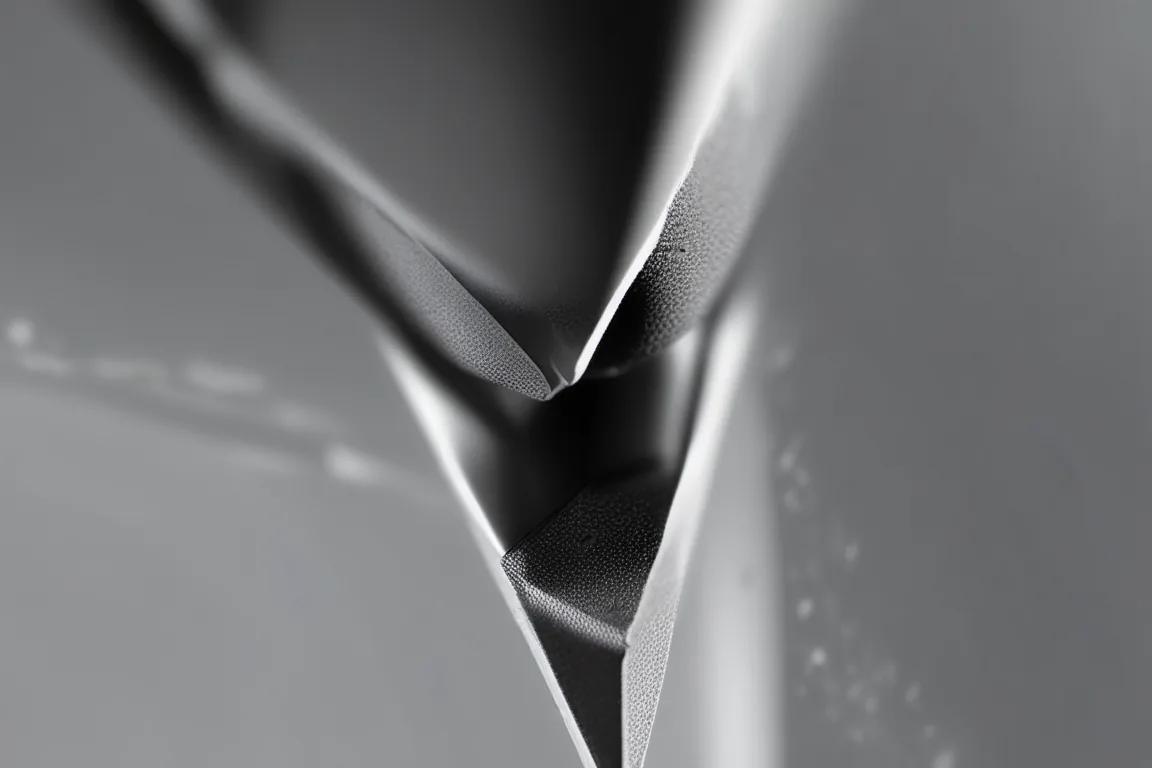
A steep point angle of 150 degrees reduces delamination forces when drilling laminate stacks, minimizing material separation issues during entry. This geometry ensures smooth initial contact on curved surfaces for consistent drilling performance.
By concentrating cutting forces over a smaller area at the tip, chips form and exit efficiently without damaging surrounding layers. Consequently, this design prolongs tool life by preventing premature wear or breakage typical in conventional geometries. Therefore, it suits precise PCB and composite material applications requiring minimal surface disruption.
What this geometry controls
A steep point angle of 150 degrees creates a sharper entry into laminate materials, reducing initial stress concentrations. This geometry minimizes delamination forces at the drill's tip during penetration. Reduced entry force helps prevent material separation, improving hole quality in PCBs and composites. Carbide hardness in this range (HV 1800 to 2000) ensures durability against abrasive wear during drilling. The HDC636 series implements this design for diameters from 0.15 mm up to 3.72 mm.
Using a point angle of 150 degrees allows easier entry on curved surfaces, enhancing drill stability and precision. This feature is critical in applications requiring accurate hole placement. The 0.3 mm diameter HDC636 tool exemplifies how geometry influences the cutting process mechanics. Smoother entry minimizes burr formation around holes in laminate stacks. TiN coating applied to HDC636 tools further enhances wear resistance and surface finish quality.
| Specification | Value |
|---|---|
| Point angle | 150 ° |
| Diameter | 0.3 mm |
| Carbide hardness | 1800–2000 HV |
| Series diameter range | 0.15–3.72 mm |
The trade-off it brings
A steep point angle reduces initial cutting forces but increases wear on the tool's edges. This higher edge stress accelerates flank wear at the cutting edge.
Flank wear shortens tool life, requiring more frequent tool changes and setup times. Increased wear also affects surface finish quality and consistency in drilling operations.
Drilling with a 150-degree angle requires careful feed rate adjustments to balance performance. Optimal settings depend on material type and stack thickness for right results.
Reduced rigidity at higher angles may cause vibration, which leads to potential inaccuracies and chatter marks on workpieces. Proper coolant application helps mitigate these issues during drilling.
Overall, while a 150-degree angle improves entry into laminate stacks, it demands precise machining parameters and monitoring to maintain efficiency and quality.
Where it is the right choice
For drilling laminate stacks, a steep point angle of 150 degrees is ideal due to its reduced delamination force on entry. This geometry ensures minimal separation damage during the initial cutting phase.
Carbide hardness in the range HV1800 to HV2000 provides durability for repeated drilling operations on composite materials. The material's wear resistance allows for consistent performance over multiple cycles.
A 0.3 mm diameter drill with a 150-degree point angle excels in PCB and composite applications, where it can navigate complex geometries efficiently. Its design minimizes the risk of tool breakage during operation due to its optimized cutting geometry.
These tools are suitable for intricate drilling tasks on curved surfaces, making them indispensable for precision work in electronics manufacturing and aerospace industries alike. The sharp entry ensures clean cuts with minimal burr formation around holes.
Using these drills requires a steady feed rate and precise control to maximize tool life and hole quality. Regular maintenance of equipment and adherence to manufacturer guidelines further enhance operational efficiency.
Where it is misapplied
A steep point angle of 150 degrees is designed for laminate stacks, not general metalwork like steel or aluminum. Cutting these materials can cause the tool's edges to chip due to excessive stress. Such applications require a more robust geometry with a larger point angle. Incorrectly choosing this geometry for metals reduces tool life and increases breakage risk. Always verify material type before selecting such specialized drill geometries.
This paragraph covers incorrect use, moving to other scenarios not mentioned earlier. A steeper entry angle creates greater heat concentration in harder materials, accelerating wear. This excessive heat can lead to premature failure of the cutting edge, even with proper coolant application. Harder metals require a geometry that distributes forces more evenly across the tool face. Using the wrong geometry results in poor surface finish and inconsistent hole quality. Always consult material-specific guidelines before choosing drilling parameters.
Frequently asked
What is the right angle for drilling laminate stacks?
A steep point angle around 150 degrees reduces delamination force, making it ideal for starting holes on curved surfaces in PCBs and composites.
Why use a 150-degree point angle drill bit?
This angle minimizes entry stress when drilling laminate stacks, preventing chips and reducing the likelihood of delamination. It is suitable for PCBs and composite materials but not general metalwork due to increased risk of chipping.
What are the benefits of using HDC636 bits with 150-degree points?
HDC636 bits with a 150-degree point angle offer better entry performance on curved laminate surfaces, reducing delamination forces. They work well for PCB and composite drilling but not recommended for metal due to higher risk of chipping.