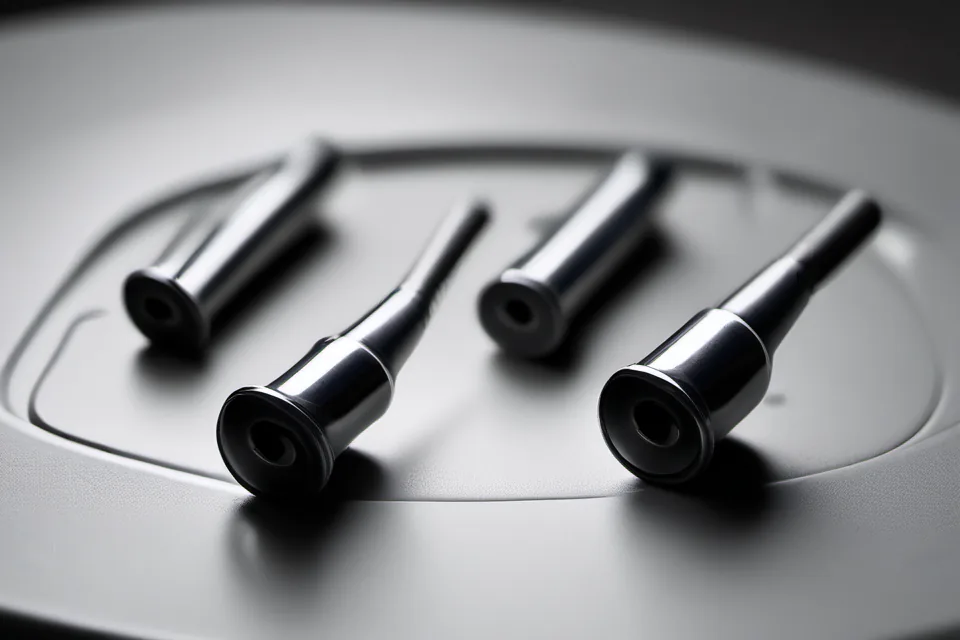
Carbide drills can produce oversized holes due to wear or manufacturing defects, affecting their precise diameter. A small deviation in a drill's diameter contributes significantly to hole size variation during machining operations. Our DC326 drill has a consistent 1 mm cutting tip and a robust 3.2 mm shank for stability. This design minimizes inherent tool errors by maintaining strict tolerances on its geometry and hardness, ranging from 89 to 93 HRC. Ensuring precise hole sizes demands not only accurate tools but also careful inspection of machining conditions like spindle alignment and workpiece fixturing.
The symptom as it appears
An oversized hole from a carbide drill appears larger than specified tolerances on the part. Wear marks or cracks may be visible at the tip of the tool.
Surface roughness around the hole often increases, indicating inconsistent drilling pressure. The drill's diameter measured directly might differ slightly from its nominal size.
| Specification | Value |
|---|---|
| Shank diameter | 3.2 mm |
| Diameter | 1 mm |
| Carbide hardness | 89–93 HRC |
What can produce that symptom
A carbide drill can produce an oversized hole due to wear or manufacturing defects, altering its exact diameter. Wear reduces the tool's sharpness, causing it to spread metal more than intended. Manufacturing flaws like uneven surfaces can also distort drilling precision. Cracks or chips near the tip indicate severe wear affecting hole size accuracy. Regular inspection identifies issues before they lead to oversized holes.
Defects in material hardness fall outside typical ranges of 89–93 HRC, impacting durability and performance negatively. Such variations mean the drill cannot maintain its intended dimensions under pressure. This deviation contributes significantly to larger than expected hole sizes. Proper maintenance checks include verifying the tool’s structural integrity. Ensuring carbide consistency prevents manufacturing defects that cause oversized holes.
The order to check things
When a hole is oversize, start by checking for runout in the spindle and holder assembly first. This step often reveals loose clamping or worn components that affect accuracy. Adjusting these parts can correct deviations without changing tools or speeds.
Next, inspect the carbide drill itself for signs of wear or damage at its tip. Even slight irregularities in a 1 mm diameter can lead to oversized holes. A micrometer is useful here; measure the actual size and compare it with specifications. If the tool meets all standards, check machining parameters such as speed and feed rates next. Adjusting these may resolve issues without replacing tools frequently.
Confirming the cause before changing anything
Before changing any parameters, measure the drill diameter using a precision micrometer. Compare this measurement against the specified dimensions provided in the tool catalog or data sheet. If the measured diameter matches the specifications exactly, inspect the spindle for runout issues that could affect hole size during drilling operations. Runout can cause eccentricity and result in oversized holes even with new tools. Check the holder’s clamping mechanism to ensure it is securely fastened without play or looseness affecting tool stability.
Loose clamping allows the drill to wobble, contributing to larger than intended hole diameters. Verify that all components are within their tolerance ranges by referencing manufacturer specifications and maintenance guidelines. Replace any worn parts immediately to maintain optimal drilling accuracy and performance consistency. After confirming there is no excessive runout or loose components, reassess the workpiece setup for stability and rigidity. A stable workholding system minimizes deflection during cutting operations, which leads to more precise hole dimensions.
Frequently asked
Why is my drilled hole coming out bigger than it should?
Oversize holes often result from runout, an unbalanced tool, excessive speed, or movement of the workpiece. Inspect the holder and spindle for issues before changing the drill.
What causes oversized holes when drilling?
Common causes include tool imbalance, high speeds, and loose clamping on the workpiece. Check the collet chuck and machine spindle stability first.
My hole is too big after drilling, what's wrong?
Drill diameter alone rarely causes oversize holes. Look for issues like runout in your setup or an unbalanced tool before blaming the drill itself.