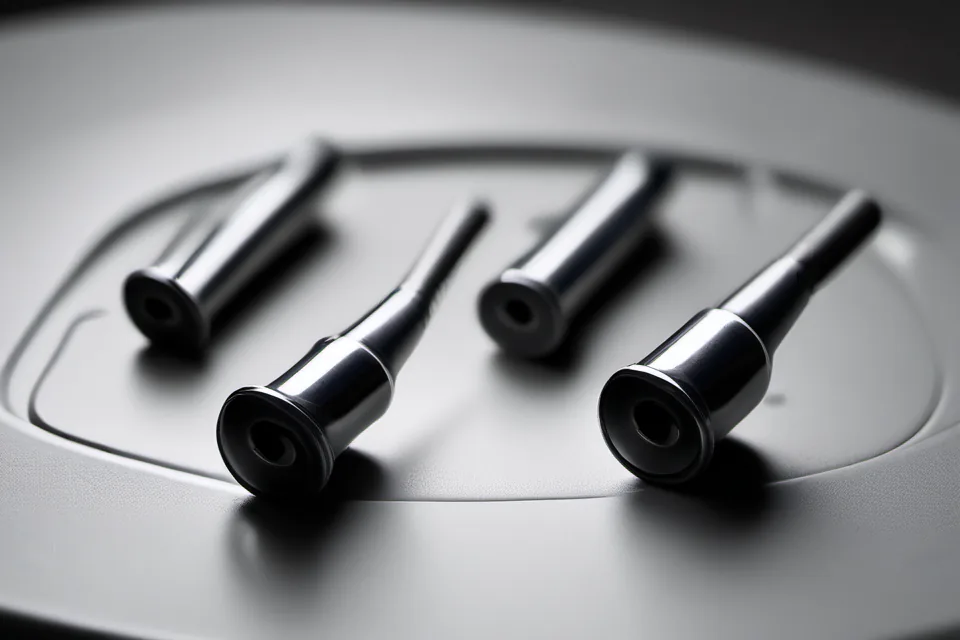
Crater wear on carbide tools reduces cutting edge life and causes premature chipping, especially at high speeds in steel. Carbides with hardness between 89 and 93 HRC resist cratering better than softer alternatives. Thermal conductivity values ranging from 80 to 100 W/(m·K) help dissipate heat away from the cutting edge, slowing diffusion and chemical reactions that cause wear. A geometry with a 135-degree point angle evenly distributes stress across the rake face during machining operations.
The symptom as it appears
Crater wear appears as a hollowed-out depression on the rake face near the cutting edge. It grows over time, starting small and expanding with continued use at high temperatures. As wear progresses, the tool's cutting efficiency drops significantly due to increased friction and heat generation. On the machined surface, this leads to rougher finishes and inconsistent material removal rates. Eventually, severe wear weakens the carbide substrate, which leads to catastrophic chipping and rapid failure of the cutting edge. The initial signs on the workpiece include a sudden increase in surface roughness and visible marks where the tool no longer maintains its sharp profile. Continued machining under these conditions results in an irregular cut pattern, indicating that the tool is not performing optimally anymore. The operator may notice increased power consumption and slower machine speeds required to maintain cutting quality. This degradation signals the need for a new cutting tool before serious damage occurs or production stops due to excessive wear.
What can produce that symptom
Crater wear develops when cutting speeds exceed material limits or coatings fail at high temperatures. In steels, using a carbide with hardness between 89–93 HRC helps resist wear under stress. Thermal conductivity ranges from 80 to 100 W/(m·K) for these materials; higher values transfer heat away better during cutting operations. Geometry matters too: a point angle of 135 degrees reduces friction and local overheating.
Cratering accelerates if feed rates are too high or depths of cut are excessive, stripping protective layers off the carbide surface faster than they can reform. Slower speeds like those at 25000 rpm for carbon steel reduce thermal stress on tools. For alloy steels, reducing speed to levels such as 13000 rpm lessens wear patterns by lowering temperature peaks near the cutting edge. Adjusting parameters to fit material hardness prevents rapid degradation of carbide edges.
The order to check things
Start by checking if your cutting speed is within safe limits for the material hardness range you are using. If too high, reducing it can significantly slow down crater wear formation. Next, inspect your carbide’s coating integrity at the hot spot of the rake face. A damaged or worn-out coating exposes the base carbide to chemical attack and diffusion. Then verify if your tool geometry supports adequate chip control. For example, a 135-degree point angle helps in managing chips effectively during steel cutting operations.
After that, ensure coolant is applied correctly for optimal cooling of the rake face. Inadequate lubrication can accelerate crater wear by raising local temperatures excessively. Lastly, review the workpiece material properties and adjust your process parameters if necessary. Changing these can help mitigate conditions causing excessive heat and thus reduce crater wear.
Confirming the cause before changing anything
To confirm crater wear is due to high cutting speed, measure current vc and compare against safe limits for your material hardness range. If above limit, reducing speed can significantly delay wear progression.
Next, inspect rake face microscopically for initial signs of diffusion and chemical attack at the hottest point near the edge. Observing these early stages helps in identifying the exact cause before it worsens visibly.
Frequently asked
What causes crater wear on carbide tools?
Crater wear occurs when diffusion and chemical reactions heat the rake face, weakening it from behind. This happens at high speeds during steel cutting, which leads to eventual chipping. Using coated tools with hot hardness or reducing cutting speed can prevent this.
How does coating help against crater wear?
Coatings like TiAlN provide hot hardness that slows down diffusion and chemical attack on the carbide tool's rake face. This prolongs tool life by preventing premature wear at high temperatures encountered during steel machining.
What rpm should I use to avoid crater wear?
To prevent crater wear, reduce cutting speed when working with steels. For example, use 18000 rpm or lower for carbon steel and 9000 rpm or less for alloy steel. Lowering the speed decreases heat buildup on the rake face, slowing down wear processes.