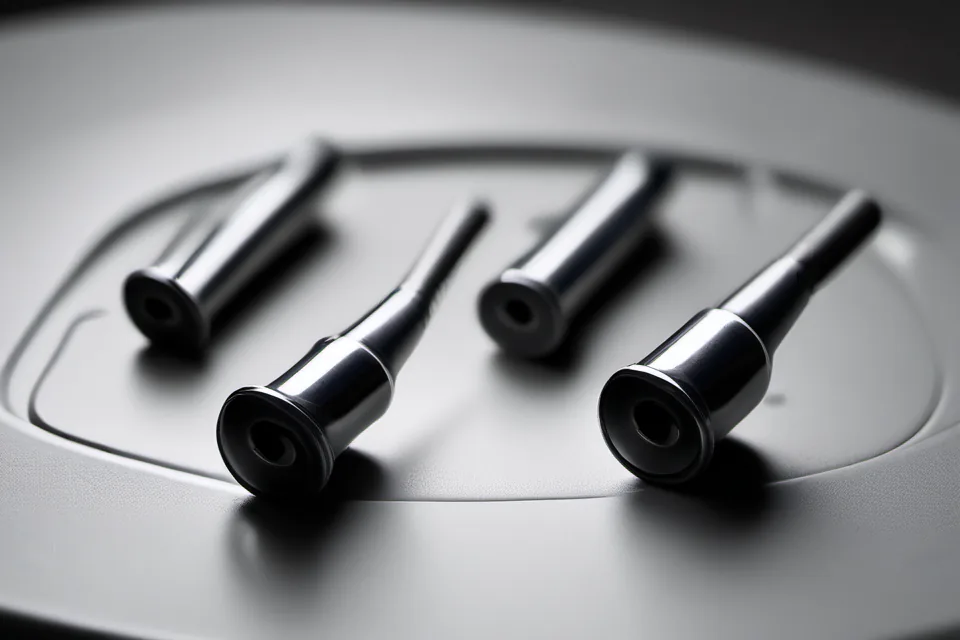
DC836 tools with a bronze coating and 135° point angle resist notch wear better than similar carbides due to their hardness range from 89 to 93 HRC. This prevents deep notches from forming as they cut into work-hardening steels repeatedly. As the edge crosses the surface, it rubs on already-cut material, causing wear. The higher hardness of DC836 tools means less material removal at the notch point, slowing wear progression significantly. Consequently, these tools maintain cutting performance longer during operations at 20000 rpm to 9000 rpm with feed rates from 40 mm/min to 100 mm/min.
The mechanism
Notch wear starts when the cutting edge contacts already machined material, causing friction and heat. This increases as the edge slides over hardened steel surfaces repeatedly. The edge's hardness, at 89 to 93 HRC, resists initial abrasion but work-hardening materials can still cause deep notches. Slower feed rates of 40 mm/min or less reduce wear by decreasing surface contact time.
Higher speeds from 70 m/min up to 130 m/min increase notch formation because friction rises with cutting speed. Tools operating at lower spindle speeds, like 9000 rpm, experience slower heat buildup and less wear. Changing the point angle does not affect notch resistance directly but altering feed rates can mitigate wear issues significantly. Smaller diameters from 0.1 mm to 14 mm might require adjustments in cutting parameters for optimal performance.
| Specification | Value |
|---|---|
| Point angle | 135 ° |
| Carbide hardness | 89–93 HRC |
| Series diameter range | 0.1–14 mm |
The conditions that produce it
Notch wear appears when the depth of cut is near or exceeds the tool's radius. Higher cutting speeds increase notch wear due to elevated temperatures at the edge. At lower feed rates, the contact time between the cutting edge and already machined material grows, intensifying friction and heat buildup. Notch wear decreases with larger depths of cut because less sliding occurs on the surface. Smaller point angles like 135 degrees concentrate stress, promoting notch formation faster than wider angles.
Notch wear is more prevalent in harder materials as they resist deformation under pressure, which leads to higher contact pressures at the edge. Changing to a softer workpiece reduces notch wear by allowing material to deform plastically and reduce friction. Using tools with a bronze coating can mitigate heat and wear due to its lower coefficient of friction compared to uncoated carbide. Higher rotational speeds exacerbate notch wear as they increase the temperature generated during cutting, accelerating edge degradation. Slower spindle rotations give the tool more time to dissipate heat before each new cut begins, reducing wear formation.
How to recognise it on the tool
Notch wear appears as a V-shaped groove at the cutting edge’s intersection with already machined material. This groove deepens over time, progressing towards the tool tip. On the workpiece surface, notch wear leaves a corresponding mark that resembles a shallow scratch or indentation. Sometimes, users confuse notch wear with chipping caused by sudden impacts on the cutting edge. Identifying it correctly is crucial for selecting appropriate cutting parameters and coatings.
Bronze-coated DC836 tools feature better resistance to notch wear due to their high hardness range from 89 to 93 HRC. In work-hardening steels, this type of wear can cause rapid deterioration of the tool edge geometry. Notch wear often leads to premature failure when it reaches critical levels near the cutting point. Users should monitor for signs of notch wear during machining operations and adjust parameters accordingly. Regular inspection and maintenance help prevent unexpected downtime and ensure optimal performance.
What actually removes the cause
Notch wear is reduced by decreasing the depth of cut below the tool radius. Smaller depths create less sliding contact with previously machined surfaces, reducing friction and heat. A point angle of 135 degrees helps concentrate forces at the cutting edge. This geometry minimizes rubbing on hardened material behind the cutting zone. Increasing feed rate moves the edge more quickly across the workpiece surface. This reduces dwell time where notch wear forms.
Slower spindle speeds also help by lowering temperatures. Commonly, applying a negative rake angle is suggested to reduce notch formation. However, this approach often worsens friction and heat at the cutting interface. Instead of changing angles, selecting tools with sharper edges proves effective. Sharper tools cut cleaner without increasing wear on already machined surfaces.
Frequently asked
What is notch wear on carbide tools?
Notch wear happens where the cutting edge meets already-cut material, deepening until it causes corner breakage. It's more severe in work-hardening steels due to increased friction and stress.
Why does notch wear occur at specific depths of cut?
Notch wear occurs when the cutting edge slides on previously machined surfaces, causing high friction and heat buildup. This is particularly problematic at deeper cuts where the tool edge contacts these surfaces for longer periods.
How do I prevent notch wear in carbide tools?
To reduce notch wear, choose appropriate feed rates and depths of cut based on material hardness. For work-hardening steels, use higher cutting speeds to minimise sliding contact and heat generation. Select tools with geometries suited to the specific application.