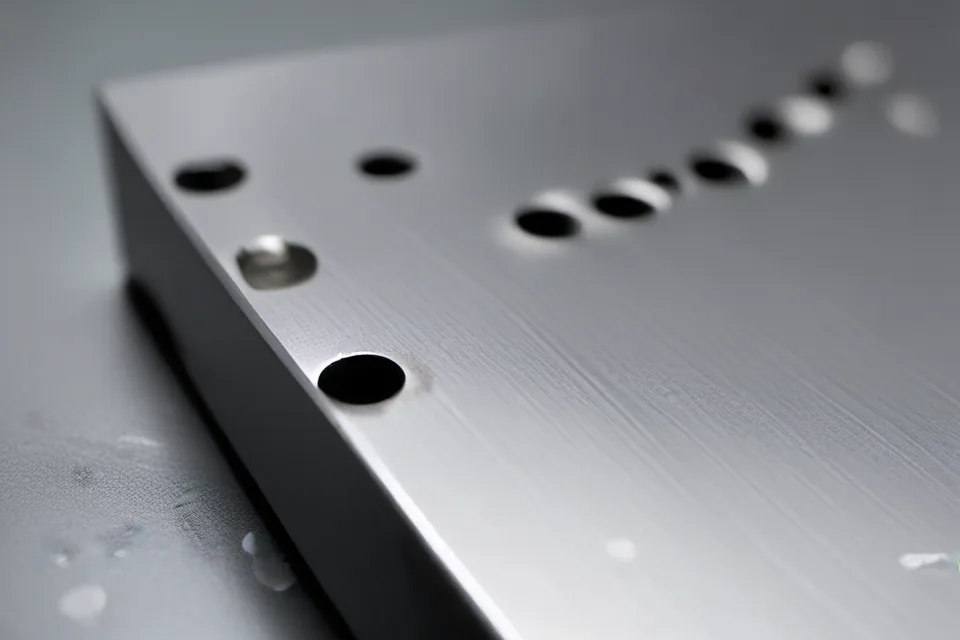
DC426L carbide tools with an 89–93 HRC coating resist notch wear better than softer alternatives when cutting titanium alloys at high temperatures and pressures. This durability comes from their harder surface, which delays chemical attack at the depth line. The sharp, 135-degree point angle on DC426L ensures optimal chip formation and minimizes initial stress concentration points. By reducing edge degradation over time, these tools maintain performance longer during extended operations. Consequently, they prevent premature corner failure in nickel alloy machining tasks.
The mechanism
Nickel alloys cause chemical reactions at the cutting edge's depth line, which leads to notch formation as heat builds up during machining. The notch deepens over time due to continuous exposure, eventually causing corner fracture if left unchecked. High hot hardness in coatings slows down this process but cannot prevent it entirely. Notch wear starts when nickel alloy chips contact the cutting tool’s edge at high temperatures and pressures.
This interaction causes microstructural changes in the carbide material along the depth line. As machining continues, these changes lead to small notches forming on the cutting edge surface. The presence of a hard coating like black DC426L delays notch propagation by providing thermal insulation and mechanical resistance. However, prolonged exposure to high temperatures eventually degrades the coating’s effectiveness, allowing wear to progress further into the carbide substrate.
| Specification | Value |
|---|---|
| Point angle | 135 ° |
| Carbide hardness | 89–93 HRC |
| Series diameter range | 0.04–3 mm |
The conditions that produce it
Notch wear appears when cutting titanium at high speeds and feeds, accelerating chemical reactions at the depth line. Heat buildup softens the carbide edge, allowing deeper notch formation over time. Hardness above 89 HRC reduces but does not eliminate this effect entirely. Using a 135° point angle geometry spreads forces more evenly across the cutting edge. Optimal speeds range between 3000 and 10000 rpm, with feeds at 20 to 80 mm/min.
Notch wear is less likely when machining at lower temperatures and reduced feed rates. Using appropriate coolant consistently lowers the tool's temperature during operation significantly. Adjusting cutting parameters to stay within recommended vc limits of 40 to 80 m/min helps. Reduced heat generation slows chemical reactions, minimizing notch formation risks effectively. Choosing a geometry that maximizes chip evacuation also decreases heat accumulation around edges.
How to recognise it on the tool
Notch wear on DC426L tools appears as a small indentation near the cutting edge, deepening with use. This notch forms at the depth line where heat and chemical reactions are most intense. Over time, the notch widens and deepens, weakening the corner significantly. On machined parts, notch wear causes surface irregularities and rough spots, reducing finish quality. It can be mistaken for poor tool alignment or an incorrect cutting speed setting.
Inspecting tools regularly helps identify early signs of notch wear before significant damage occurs. Comparing a worn tool to its unused counterpart highlights differences in edge condition clearly. Notch wear should not be confused with built-up edges or thermal cracking, which have distinct appearances and causes. Addressing notch wear involves selecting harder coatings and adjusting machining parameters accordingly. Proper tool maintenance and timely replacements prevent premature failure and improve overall performance.
What actually removes the cause
Notch wear on DC426L tools results from chemical reactions that soften the carbide edge at high temperatures and feeds. Using a coating with higher hot hardness can delay notch formation but does not prevent it entirely. A more effective solution is to reduce heat generation by changing tool geometry, specifically the point angle. Smaller point angles distribute cutting forces over a larger area, reducing localized stress concentrations and heat buildup. DC426L tools with a 135-degree point angle are designed to minimize notch wear in nickel alloys at high speeds and feeds.
Reducing feed rates and spindle speeds can decrease heat generation but also lowers productivity significantly. Lower cutting parameters alone cannot fully eliminate the risk of notch formation on carbide edges. Increasing tool diameter does not address the root cause of chemical reactions along the depth line either. The optimal approach involves a combination of material hardness, coating durability, and geometric optimization. This integrated solution effectively counters the mechanisms behind notch wear in demanding materials like titanium.
Frequently asked
How do I prevent notch wear on nickel alloys?
Notch wear occurs when chemical reactions at the cutting edge produce deep notches which leads to corner failure. Using carbide tools with high hot hardness coatings slows but does not stop this process.
What is the ideal point angle for cutting titanium?
A 135-degree point angle effectively resists notch wear during titanium machining, providing better edge strength and durability against chemical attack at the depth line.
Which DC426L part numbers resist notch wear in nickel alloys?
DC426L series tools with a black coating offer high hot hardness to slow down notch wear. Use these for diameters from 0.04 mm to 3 mm, suitable for titanium and other nickel-based alloys.