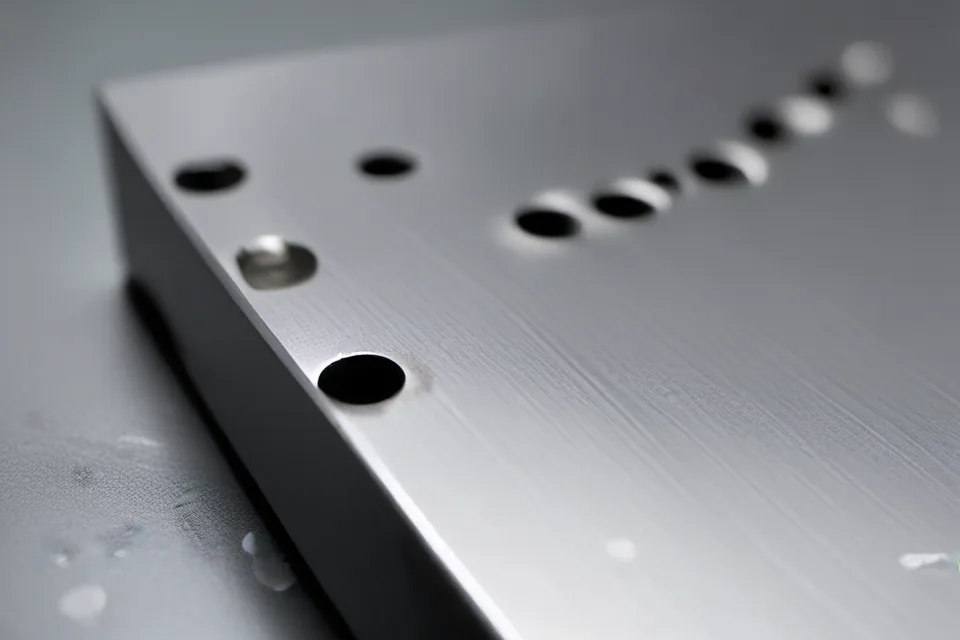
DC426 carbide tools with a 135-degree point angle and black coating significantly reduce galling on stainless steel hole walls during machining. Their hardness range from 89 to 93 HRC ensures durability against abrasive wear. The polished flutes of DC426 minimize surface damage by reducing friction between the tool and workpiece. This reduces the likelihood of chlorinated coolant-induced galling, which otherwise tears off material and accelerates wear. By maintaining smooth hole surfaces, DC426 tools prolong tool life and improve machining efficiency in stainless steel applications.
The mechanism
During machining, stainless steel can transfer onto the cutting tool's surface due to high friction. This transferred layer then peels off the hole wall, causing damage and increasing wear significantly. Coolant with chlorinated additives reduces galling by decreasing friction between the tool and workpiece surfaces. A polished flute finish on carbide tools also minimizes contact area and friction during cutting operations. Rough coatings increase the likelihood of stainless steel adhering to the tool surface.
This adhesion leads to more severe galling when the material peels off, damaging both the hole wall and the tool edge. The hardness range of 89–93 HRC for carbide tools provides excellent wear resistance against abrasive particles in machining operations. A point angle of 135 degrees ensures optimal chip formation and evacuation during stainless steel drilling. Optimal cutting parameters like spindle speeds up to 15000 rpm and feed rates between 30 mm/min and 120 m/min help maintain consistent tool performance while minimizing galling issues significantly.
| Specification | Value |
|---|---|
| Point angle | 135 ° |
| Carbide hardness | 89–93 HRC |
| Series diameter range | 0.04–3 mm |
The conditions that produce it
High friction between stainless steel and a carbide tool can cause galling when cutting speeds are too low or feeds are excessively high. Excessive feed rates, below 60 m/min cutting speed, exacerbate this issue by increasing contact time at high pressures. Galling is less likely with higher cutting speeds above 120 m/min due to reduced contact duration and lower friction coefficients. Tools coated with a black PVD coating provide smoother surfaces that resist galling better than rougher coatings during machining operations.
Using chlorinated coolants can significantly reduce the likelihood of galling by lowering friction at the tool-workpiece interface. Coolant flow should be optimized to ensure consistent lubrication across all cutting zones, minimizing localized heating and friction buildup. A polished flute surface on DC426 tools further reduces galling potential compared to unpolished flutes in similar machining conditions. Lowering the point angle can also decrease contact area but may compromise structural integrity under heavy loads.
How to recognise it on the tool
Galling on stainless steel appears as a rough, torn surface on the tool's cutting edge. This occurs when the high hardness of stainless steel transfers onto softer carbide edges.
The transferred layer peels off unevenly, creating a textured appearance with small grooves and scratches. These irregularities accelerate wear and tear over time. On machined parts, galling shows as rough patches where material is missing.
What actually removes the cause
Galling can be eliminated by changing the cause rather than just mitigating symptoms. Reducing friction requires selecting a coating that minimizes stainless steel transfer. A polished flute finish helps by reducing surface area contact, but this alone is insufficient at higher feed rates. A TiAlN coating resists galling better because it forms a stable oxide layer during cutting. Avoid using coatings with high surface roughness as they increase the risk of stainless steel adhering and peeling off.
This mechanism means that any surface finish promoting lubrication reduces friction between materials. Popular solutions often focus on coolant types or flute geometry, which may provide temporary relief but do not address the root cause. Effective long-term prevention involves choosing a coating designed to resist galling under all relevant cutting conditions. Understanding how coatings interact with stainless steel is crucial for preventing galling and maintaining tool integrity throughout machining operations.
Frequently asked
What is galling and how does it affect carbide cutting tools?
Galling occurs when stainless steel transfers onto a carbide tool, then gets torn off the hole wall, leaving a rough surface that speeds up wear. Using chlorinated coolant and polishing the flute can reduce this issue.
How do I prevent galling when drilling stainless steel?
To minimise galling during stainless steel drilling, use a polished flute on your carbide drill bit and apply chlorinated coolant. Avoid using tools with rougher coatings as they exacerbate the problem.
What RPM should I set for DC426 drills in stainless steel?
For DC426 drills in stainless steel, set RPM between 15000 and 7000 depending on material thickness and size of the drill. Lower speeds are recommended for thicker materials to prevent overheating and wear.