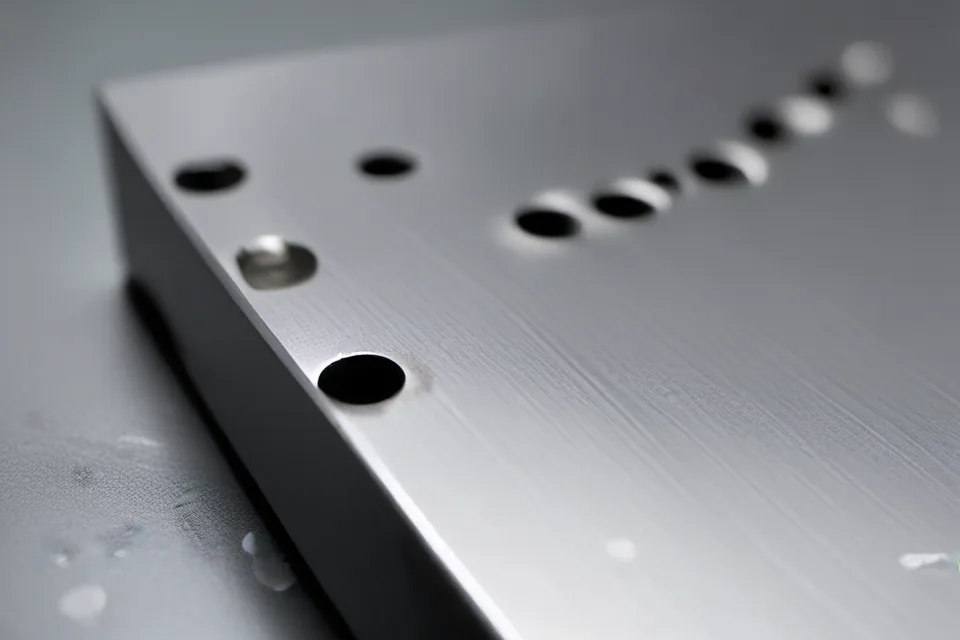
DC426L drills nickel-based alloys with hardness 89–93 HRC and thermal conductivity 80–100 W/(m·K). Coated in AlTiN, it resists temperatures up to 850–900 °C. The 135-degree point angle minimizes wear on work-hardening materials. A feed rate below the work-hardening threshold prevents surface hardening issues.
The mechanism
Carbide's high hardness resists wear from nickel alloys' work-hardening properties during drilling operations. Thermal conductivity helps dissipate heat at the cutting edge, maintaining tool sharpness for longer. AlTiN coating provides superior resistance to temperatures up to 850 °C, essential when machining materials that generate significant frictional heat. A 135-degree point angle minimizes wear and tear on the drill, ensuring optimal performance throughout its service life.
Lower spindle speeds allow more time for carbide material to cool between cuts, reducing thermal stress on cutting edges. Feeds should remain below work-hardening thresholds to prevent premature edge dulling or breakage during drilling operations. Interrupted cutting increases heat buildup at the tip and can accelerate wear compared to continuous cutting.
| Specification | Value |
|---|---|
| Point angle | 135 ° |
| Diameter | 1 mm |
| Carbide hardness | 89–93 HRC |
| Coating | AlTiN |
| Series diameter range | 0.04–3 mm |
The conditions that produce it
DC426L drills nickel-based alloys effectively when cutting speed is between 40 and 80 m/min for titanium grades. Feed rate should stay below work-hardening threshold to prevent material from hardening near the edge. For optimal performance, use lower speeds up to 3000 rpm for thicker materials and higher speeds up to 10000 rpm for thinner ones. A feed of 20 mm/min is suitable for thicker sections, increasing to 80 mm/min for thin workpieces.
Interrupted cutting exacerbates heat buildup and wear on the tool edge, reducing drill life. Continuous cutting reduces temperature spikes at the drilling point, maintaining AlTiN coating integrity up to its maximum service temperature. Drilling parameters must avoid excessive friction and heat generation to preserve carbide's thermal conductivity properties. Choosing a 135-degree point angle ensures optimal chip evacuation in nickel alloys.
How to recognise it on the tool
The DC426L tool features a distinctive 135-degree point angle, visible at the drill tip under magnification. This geometry reduces stress concentration during drilling, enhancing tool life in nickel alloys.
Drilling marks on parts made with DC426L show minimal wear signs from work-hardening effects due to carbide's high hardness. The coating appears uniformly golden-brown, contrasting with uncoated areas or other types of coatings. Interrupted cuts can introduce visible flaws not seen in continuous cutting conditions. Misidentification might occur if users confuse this tool’s 135-degree point angle with less durable geometries designed for softer materials.
What actually removes the cause
A hot-hardness coating like AlTiN performs well under high temperatures up to 900 °C, maintaining its wear resistance properties. This coating allows for continuous cutting without significant performance degradation due to heat.
The 135-degree point angle minimizes stress concentrations at the drill tip, preventing premature wear and extending tool life during nickel alloy drilling. A lower rotational speed reduces friction and heat generation at the cutting edge. Using a feed rate that stays below the work-hardening threshold prevents material from reinforcing itself against further machining. Interrupted cuts are more damaging than continuous cuts because they cause thermal shock to the drill tip, accelerating wear and tear.
Frequently asked
What is the right drill for nickel alloys?
Use a carbide drill with an AlTiN coating and a 135-degree point angle. Opt for low speeds and feeds that avoid work hardening, typically between \(40 \text{ m/min}\) to \(80 \text{ m/min}\). Interrupted cuts should be avoided.
How do I select the right drill geometry?
Choose a carbide drill with a 135-degree point angle for optimal performance in nickel alloys. This geometry minimizes heat buildup and prolongs tool life by reducing wear on the cutting edge.
What speed/feed settings work well for titanium drilling?
For titanium, use speeds of \(3000\) to \(10000 \text{ rpm}\) with feeds between \(20\) and \(80 \text{ mm/min}\). These parameters help maintain tool integrity and prevent work hardening.