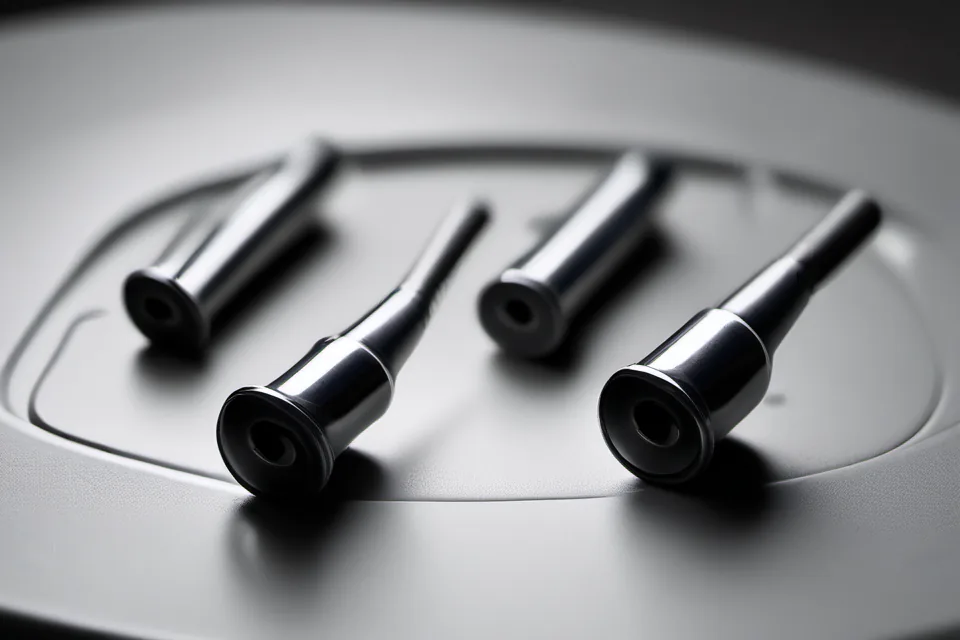
Carbide drills DC426 maintain high hardness from 89 to 93 HRC, ensuring durability and resistance to wear. Their geometry optimizes cutting forces for stable performance even when slightly worn. Operating parameters like rpm at 15000 to 25000 allow efficient machining across various materials. Feed rates between 50 and 750 mm/min accommodate different workpiece thicknesses, maintaining hole quality consistency. This stability minimizes size drifts in batches, reducing misattributed machine errors and saving costs.
What happens in the cut
As a carbide drill wears during cutting operations at 15000 rpm with feed rate 750 mm/min, its diameter decreases slightly.
This reduction alters chip thickness and surface finish quality, affecting hole size consistency across batches.
| Specification | Value |
|---|---|
| Diameter | 0.5 mm |
| Carbide hardness | 89–93 HRC |
| Series diameter range | 0.04–3 mm |
Why it looks like something else
As a carbide drill wears, its diameter decreases slightly below the initial 0.5 mm value. This size reduction changes chip formation and cutting forces dynamically during operation. Reduced diameter affects the tool's interaction with material at 15000 rpm, feed rate 750 mm/min. The altered geometry can lead to inconsistent hole sizes across a batch of parts. Operators may misinterpret these variations as machine setup issues rather than worn tools.
Worn carbide drills continue cutting but shift the focus from precision to durability limits. Hardness range from 89 to 93 HRC means wear occurs gradually, not catastrophically. Gradual changes in performance can mask when a drill needs replacing based on diameter. This subtle change impacts chip control and heat dissipation during drilling operations. Misalignment or vibration issues on the machine could be incorrectly blamed for size drifts.
The real cause
As a carbide drill wears, its diameter decreases slightly below the initial 0.5 mm value. This reduction changes chip formation and cutting force distribution. The altered geometry leads to inconsistent material removal rates during drilling at 180 m/min feed rate 750 mm/min. Thus, hole diameters vary across successive operations. Reduced drill diameter causes increased contact between the tool and workpiece, raising friction and heat generation.
Higher temperatures accelerate further wear of the cutting edge. Worn drills produce larger holes than intended because of the reduced effective cutting diameter. This size drift affects part dimensions in subsequent manufacturing processes. To maintain dimensional accuracy, monitoring tool condition is essential before each operation at 15000 rpm feed rate 750 mm/min. Regular inspection prevents excessive wear and its associated size variations.
The fix
Replacing a worn drill with one that matches the initial specifications restores consistent hole sizes across batches. A new DC426 drill at 15000 rpm and feed rate of 750 mm/min ensures optimal chip formation and cutting force.
Using a worn drill for extended periods hides immediate cost savings but leads to inconsistent hole diameters over time. Switching tools frequently avoids size drift issues, maintaining precision throughout the production run.
Frequently asked
How long can I use a worn carbide drill before it becomes unusable?
Continuing to use a worn carbide drill leads to inconsistent hole sizes, affecting part accuracy and increasing machine setup time. Replace drills when cutting performance noticeably degrades or surface finish deteriorates.
What is the hardness range for DC426 carbide tools?
DC426 carbide tools have a hardness range of 89 to 93 HRC, providing excellent wear resistance and durability in various machining operations.
Can I use a DC426 drill past its recommended cutting data?
Using a DC426 drill beyond its specified rpm (25000, 18000, or 15000), feed rates (50 to 750 mm/min), and vc (100 to 180 m/min) can result in poor surface finish and premature tool failure. Stick to recommended parameters for right results.