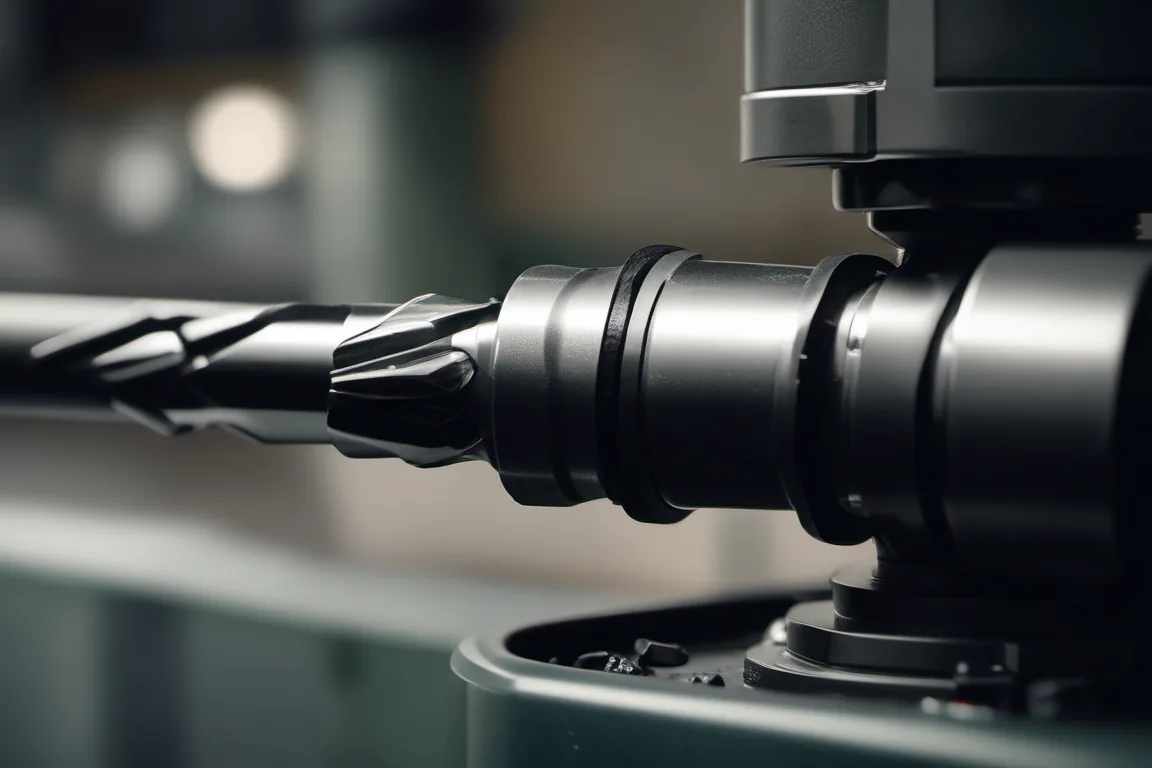
Using a 3.17 mm shank in an eighth-inch collet leads to poor clamping, causing significant runout issues invisible at setup but apparent during cutting. This error degrades tool performance and surface finish, which leads to scrapped parts and wasted material. The carbide hardness of DC326 series ranges from 89 to 93 HRC, yet even this cannot compensate for improper collet selection. Runout results in inconsistent chip formation and reduced machining accuracy, affecting production efficiency and quality control. Tools may fail prematurely due to excessive vibration and thermal stress, increasing downtime and maintenance costs.
What happens in the cut
Runout from incorrect collet clamping misaligns the cutting edge against the workpiece surface unevenly. This uneven contact causes inconsistent material removal and increases tool wear over time. During operation at 50 mm/min feed rate, runout generates non-uniform chip thickness and alters cutting forces dynamically. Such variations can lead to premature flank wear on the uncoated DC326 carbide tool series. At higher speeds like 180 m/min, these issues become more pronounced, reducing tool life significantly.
At lower spindle speeds of 15000 rpm, the impact of runout is less severe but still affects cutting quality. Increased feed rates to 750 mm/min exacerbate wear due to intensified friction and heat generation at the cutting edge. The result is accelerated deterioration of the carbide geometry, compromising dimensional accuracy in machined parts. This effect reduces overall machining efficiency and increases scrap rate from rejected workpieces.
| Specification | Value |
|---|---|
| Shank diameter | 3.17 mm |
| Carbide hardness | 89–93 HRC |
| Series diameter range | 0.04–3.17 mm |
Why it looks like something else
Runout from incorrect collet clamping causes uneven wear on the cutting edge over time. Uneven wear changes how the tool cuts, which leads to inconsistent material removal rates. This inconsistency appears as variations in hole diameter and surface finish quality. Operators may misinterpret these symptoms as issues related to tool dullness or workpiece hardness variability. Correcting the collet choice resolves these apparent problems immediately.
Carbide's high hardness range between 89 and 93 HRC means wear patterns are clearly visible but not easily quantifiable without measurement tools. The specific geometry of the DC326 ensures predictable cutting behavior under correct clamping conditions. Misalignment from incorrect clamping disrupts this predictability, making troubleshooting challenging for operators unfamiliar with these nuances. Identifying runout as a cause requires careful observation and understanding of tool interaction dynamics. Ensuring proper collet selection prevents such issues entirely, maintaining consistent performance throughout the tool's life.
The real cause
Carbide's extreme hardness ranges from 89 to 93 HRC, making it extremely rigid and resistant to deformation under clamping force. When a 3.17 mm shank is improperly held in an eighth-inch metric collet, only two points engage instead of the full circumference, reducing grip strength. This partial engagement allows the tool to wobble, creating significant runout. During operation at high speeds like 25000 rpm or lower settings such as 15000 rpm, this runout causes uneven pressure on the cutting edge against the workpiece surface.
Uneven wear patterns develop over time because of inconsistent contact points across different machining operations. This uneven wear leads to changes in the tool's geometry and performance. As a result, it fails to maintain precise control during feed rates from 50 mm/min up to 750 mm/min, causing variations in cut depth and surface finish quality. The cutting edge experiences premature dulling due to the concentrated stress at misaligned contact points rather than evenly distributed loads across its full length.
The fix
Replacing the metric collet with an eighth-inch version ensures full circumference clamping on a 3.17 mm shank, eliminating runout issues entirely for consistent cutting performance.
Using a shim between the toolholder and the machine spindle reduces visible runout but does not address the underlying uneven force distribution on the carbide. This can temporarily mask inconsistencies without solving them fundamentally.
Frequently asked
How tight should an 8th inch collet hold a 3.17 mm shank?
An eighth-inch collet designed for imperial sizes holds a 3.17 mm shank loosely, causing runout issues. Ensure you use metric collets to avoid this problem and maintain precision.
Why does my carbide tool walk when machining carbon steel?
Runout from improperly clamping an 8th inch shank in a metric collet causes your tool to walk. This happens because the shank is held on two points, not around its circumference. Use correct-sized collets for better performance.
What causes runout with DC326 carbide tools?
Using an eighth-inch imperial collet with a 3.17 mm shank results in uneven clamping and runout. Switch to metric collets that fit the diameter properly to eliminate this issue.