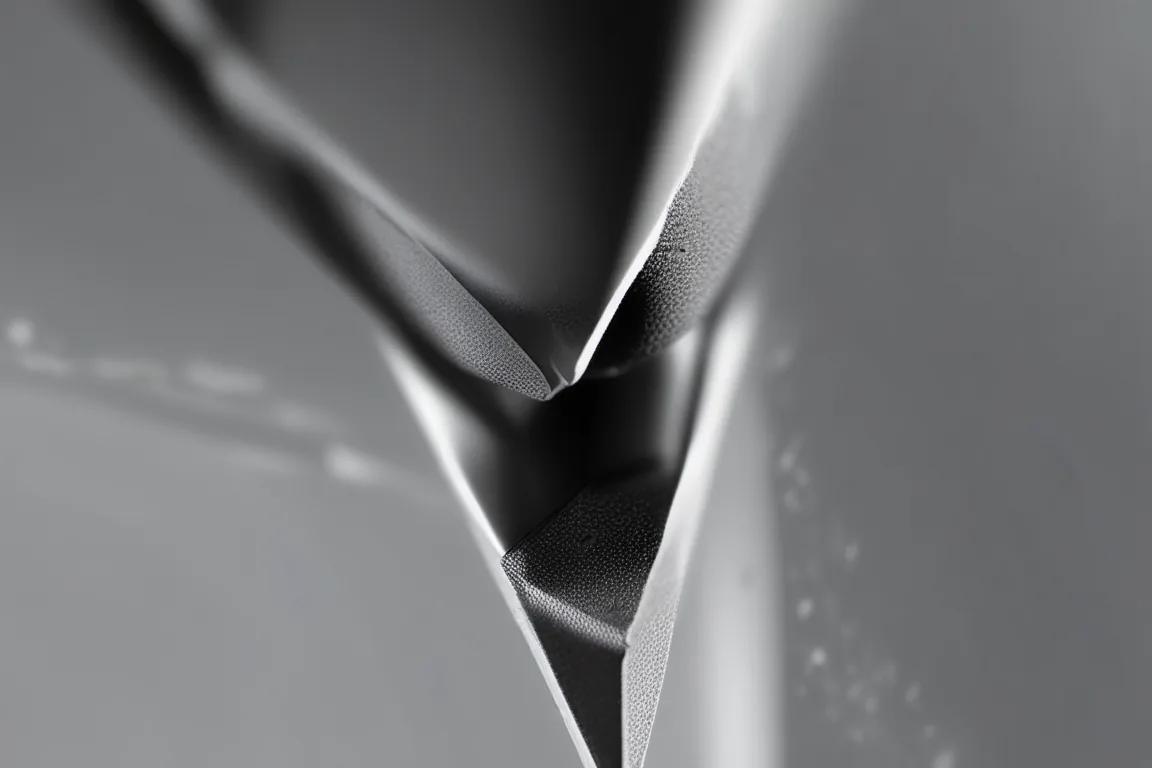
The DC326 series has an edge preparation of -0.003 mm, reducing microscopic chipping while maintaining high carbide hardness at 1800–2000 HV. This small hone prevents initial flank wear on tools with diameters from 0.04 to 3.17 mm. By limiting the chamfer size, it avoids altering the effective rake angle crucial for micro drills. Consequently, this preparation enhances tool durability without significantly increasing cutting forces. Thus, DC326 series ensures long-lasting performance in precise machining operations.
What this geometry controls
The edge preparation on DC326 tools reduces microscopic chipping at the cutting edge. This minimizes initial wear from small cracks and chips that can form during machining operations. It maintains a sharp primary cutting edge despite its reduced thickness, ensuring efficient material removal. The -0.003 mm chamfer redirects forces away from the brittle carbide tip, enhancing durability without altering the effective rake angle significantly. The preparation also helps prevent rapid flank wear by smoothing out surface irregularities on contact with workpieces.
By doing so, it extends tool life in applications requiring high precision and repeatability. Each DC326 tool undergoes rigorous quality control to ensure consistent edge geometry across all diameters from 0.04 mm up to 3.17 mm. This uniformity supports reliable performance in various machining tasks, including drilling small holes with tight tolerances. The reduced edge thickness of the chamfer balances wear resistance and cutting efficiency, allowing for optimal material removal rates while minimizing tool breakage risks associated with high hardness carbide tools.
| Specification | Value |
|---|---|
| Diameter | 0.05 mm |
| Carbide hardness | 1800–2000 HV |
| Series diameter range | 0.04–3.17 mm |
The trade-off it brings
Edge preparation on DC326 tools reduces microscopic chipping at the cutting edge, preventing initial wear from small cracks and chips. This preparation measures -0.003 mm, balancing durability against tool sharpness. Higher cutting forces result from this reduced sharpness but extend tool life significantly. Smaller edge preparations are necessary for micro drills to maintain effective rake angles. This balance ensures optimal performance in precision machining applications.
Removing microscopic chipping improves flank wear resistance, enhancing the overall lifespan of carbide tools. However, a smaller edge angle increases cutting forces and can affect material removal rates negatively. The 0.05 mm diameter tool benefits from this preparation without altering its effective rake critically. This approach supports reliable performance in intricate operations requiring high precision. By carefully managing these factors, manufacturers achieve better process reliability and part quality.
Where it is the right choice
The DC326 series uses a precise edge preparation of -0.003 mm, which is critical for operations requiring high precision on small diameters like 0.05 mm drills.
This preparation prevents microscopic chipping that can initiate wear, extending tool life in materials with varying hardness up to 1800–2000 HV.
Where it is misapplied
Edge preparation on carbide tools like DC326 can become ineffective if applied too heavily. Excessive hone or chamfer weakens the cutting edge's integrity and durability. A large edge preparation increases cutting forces significantly, reducing tool life and productivity. This is particularly problematic for fine micro tools such as 0.05 mm diameter drills where precision is critical. Choosing an incorrect edge preparation may cause unexpected wear patterns and reduce the tool’s effectiveness in delicate materials requiring a sharp but durable edge.
The precise balance of -0.003 mm chamfer on DC326 ensures optimal performance without compromising strength or accuracy. Using standard carbide tools with no edge preparation for micro drilling can lead to rapid flank wear from minor chipping and cracks at the cutting edge, especially in brittle materials. This results in poor surface finish and premature tool failure, increasing production costs and downtime. For applications that demand high precision on small diameters, selecting an appropriate edge preparation is crucial. It ensures longevity while maintaining sharpness for clean cuts, even when working with thin or fragile workpieces.
Frequently asked
What is edge preparation on carbide micro tools?
Edge preparation involves adding a slight hone or chamfer to reduce microscopic chipping, which starts wear but increases cutting forces slightly. For micro drills like DC326 series, this angle must be minimal to avoid altering effective rake.
How does edge preparation affect drilling with carbide micro tools?
Edge preparation on carbide micro tools reduces the risk of initial wear by smoothing out tiny chips at the edge. However, it can increase cutting forces slightly and needs careful adjustment for drills in the DC326 series to maintain correct rake angles.
Why is a small chamfer better than a sharp edge on carbide micro tools?
A small chamfer on carbide micro tools prevents microscopic chipping that initiates wear while keeping cutting forces manageable. For the DC326 series, this chamfer must be very fine to avoid altering the effective rake angle of these tiny drills.