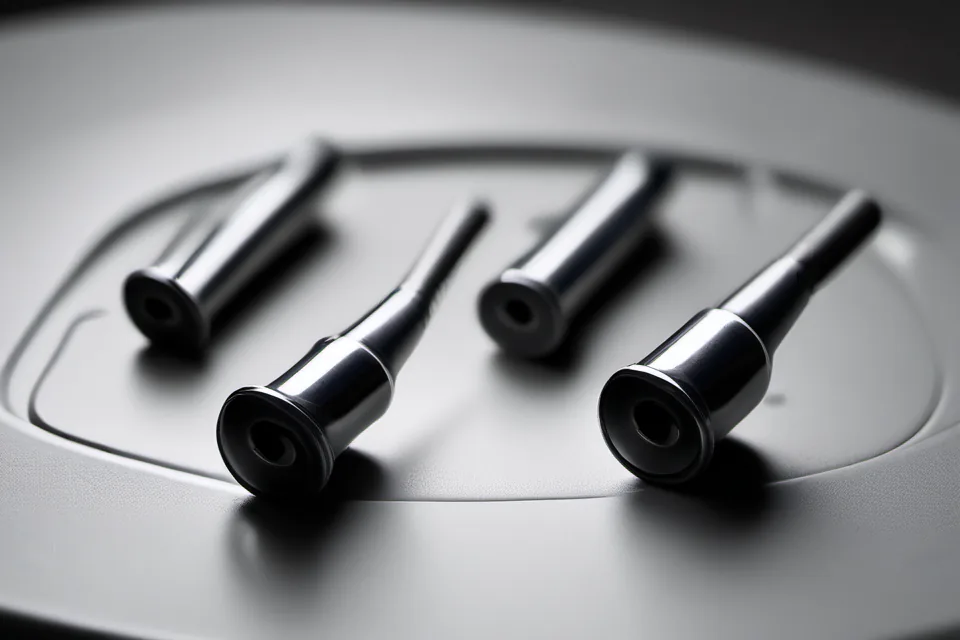
A bell-mouth at hole entry indicates a lack of guidance, often caused by insufficient rigidity or misalignment. Using a spot drill or bushing can prevent this issue; reducing tool diameter does not address the problem’s root cause. The HDCC636 series with TiN coating and 118° point angle ensures precise entry into workpieces due to its rigid design. This geometry minimizes wear and tear, maintaining sharpness during high-speed operations up to 180 m/min cutting speed. Consequently, operators achieve clean hole entries without the need for secondary rework processes.
The symptom as it appears
A bell-mouth appears as an enlarged entrance at the start of a hole, wider than the drill diameter. This enlargement is due to excessive deflection when the tool begins cutting. The carbide material's hardness ranges from 89 to 93 HRC, providing wear resistance but also brittleness that can lead to breakage without proper support. A spot drill or bushing should be used before drilling to prevent this issue. At hole entry, the drill point angle of 118 degrees causes initial contact and stress concentration.
Misalignment during initial penetration leads to increased lateral forces on the cutting edge. Using a shorter approach length reduces deflection by minimizing unsupported tool length. A bell-mouth formation shows wear patterns on the cutting edges due to excessive side loads. These marks indicate where the drill bit has been pushed sideways, causing material removal beyond intended dimensions. Proper alignment and rigidity ensure even pressure distribution across all flutes during entry.
| Specification | Value |
|---|---|
| Point angle | 118 ° |
| Carbide hardness | 89–93 HRC |
| Series diameter range | 0.43–4 mm |
What can produce that symptom
A bell-mouth occurs when a carbide drill starts cutting without proper guidance at entry. This misalignment can happen due to insufficient rigidity or improper setup of the workpiece. Carbide drills with an 118-degree point angle are prone to this issue if not properly supported. A spot drill or bushing improves alignment and reduces deflection, correcting the problem directly. Using a shorter approach length also mitigates entry misalignment issues.
Attempting to resolve it by changing only the drill diameter does not address rigidity problems. A bell-mouth at hole entry indicates inadequate support when starting to cut, causing initial enlargement beyond intended size. Employing optimal cutting parameters like 25000 rpm for softer materials minimizes such defects. Similarly, using lower feed rates around 75 mm/min can help maintain better control during drilling operations.
The order to check things
Start by examining if a spot drill or bushing resolves the issue without changing the main drill size. This approach is inexpensive and addresses rigidity problems effectively. Next, check if the machine's setup allows for proper alignment of the drilling operation. Misalignment often leads to excessive deflection at entry, causing the bell-mouth problem. Adjust the feed rate and rotational speed according to recommended cutting data to ensure optimal performance.
Lowering these parameters can reduce stress on the tool during entry. Verify that the drill length is not too long for the given setup. A shorter approach reduces overhang and improves stability, minimizing deflection at hole entry. Finally, consult the machine's operator manual or a mechanical engineer if adjustments do not resolve the issue. Professional advice helps identify underlying rigidity issues accurately.
Confirming the cause before changing anything
To confirm a bell-mouth issue, check if the drill's entry point is misaligned before cutting starts properly. Measure the hole entrance diameter; it should match the drill size exactly at entry.
If it does not, rigidity issues are likely causing deflection. Try using a spot drill or bushing to guide the carbide tool during entry.
Frequently asked
Why does my carbide drill have a bell-mouth at the entry point?
A bell-mouth indicates poor guidance when starting the hole. Use a spot drill, bushing, or shorter approach length to correct this issue rather than using a smaller diameter drill.
What is the ideal hardness for carbide drills?
Carbide drills typically range from 89 to 93 HRC. This hardness ensures durability and performance in various materials without compromising edge wear resistance.
How do I choose the right cutting speed for HDCC636 drills?
For optimal performance with HDCC636 drills, use a spindle speed of 25000 rpm or less depending on material type. Maintain feed rates between 50 to 75 mm/min and cutting speeds from 100 to 180 m/min for right results.