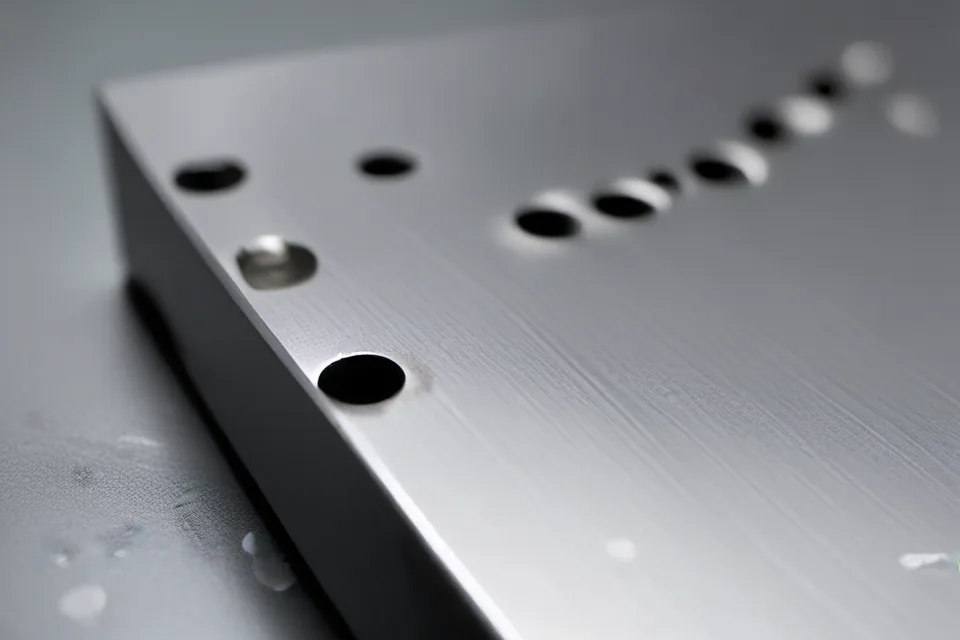
The black coating on DC426L tools resists titanium's high-temperature reactivity better than other coatings, extending tool life during drilling at up to 80 m/min speeds. This resistance lets you use higher spindle speeds for faster titanium work without losing tool integrity. As a result, you can achieve the same cutting performance as with softer materials but on titanium. Faster feeds and lower point angles mean less wear over longer operations, reducing downtime and increasing productivity. Therefore, selecting this coating ensures optimal drilling in titanium applications by managing heat-induced material reactions effectively.
What the coating does in this cut
The black coating on DC426L tools forms a stable interface with titanium at high temperatures, preventing dissolution during cutting. This stability allows higher cutting speeds without immediate tool wear or failure. At 89–93 HRC hardness, the carbide substrate remains durable under extreme conditions, maintaining sharp edges for efficient chip formation and removal.
A 135-degree point angle geometry minimizes friction between the tool and workpiece, reducing heat generation at the cutting edge. Cutting data indicates optimal performance ranges from 3000 rpm to 10000 rpm with feed rates of 20 mm/min up to 80 mm/min for titanium drilling operations. These parameters ensure consistent results across various diameters from 0.04 mm to 3 mm, adapting to different production requirements efficiently.
| Specification | Value |
|---|---|
| Point angle | 135 ° |
| Carbide hardness | 89–93 HRC |
| Series diameter range | 0.04–3 mm |
The chemistry between coating and workpiece
The black coating on DC426L tools contains aluminum oxide, which forms a stable layer at high temperatures when drilling titanium. This layer resists chemical reactions that would otherwise cause dissolution of other coatings. At cutting speeds between 40 and 80 m/min, the tool maintains its hardness from 89 to 93 HRC, ensuring durability under extreme conditions.
A point angle of 135 degrees helps distribute heat away from the cutting edge efficiently. When using DC426L tools at 3000 rpm with a feed rate of 20 mm/min, titanium workpieces show minimal signs of reaction with the coating. Higher speeds up to 10000 rpm and corresponding increases in feed rates require careful selection of appropriate cutting parameters to maintain tool integrity.
How it fails
At high speeds, titanium reacts with most coatings by dissolving them at elevated temperatures. This reaction rate increases as cutting speed rises above 6000 rpm for DC426L tools. The black coating on DC426L contains aluminum oxide that forms a protective layer during cutting. This layer slows down the chemical reaction but eventually thins and breaks up with prolonged use. As the tool's edge wears, its geometry changes, increasing the cutting force and heat generation.
Higher temperatures accelerate titanium's reaction with the remaining coating, reducing tool life further. Unlike typical wear patterns where the carbide substrate shows marks first, DC426L fails when its aluminum oxide layer degrades entirely. Once this happens, the underlying carbide suffers from direct contact with titanium. At 10000 rpm and above, even the black coating on DC426L can no longer prevent titanium's reaction fully. The tool surface becomes visibly compromised long before traditional wear indicators appear.
Choosing between the available options
When selecting a coating for titanium drilling, consider the speed range where your tool will operate. Higher cutting speeds demand coatings that remain stable at elevated temperatures. For DC426L tools, the aluminum oxide in the black coating forms a protective layer during high-speed operations. This layer maintains its integrity even as temperatures rise significantly above room temperature. At lower speeds between 3000 and 6000 rpm, any of the available coatings will provide adequate protection against titanium reaction.
However, for peak performance at higher speeds like 10000 rpm, the black coating's stability becomes crucial. Understanding this temperature stability helps in choosing the right tool for your specific application parameters. For instance, if you frequently work at or above 6000 rpm, opt for the DC426L with its stable black coating. Testing different coatings under actual cutting conditions can further refine your selection process and ensure optimal performance and durability of your tools during titanium machining operations.
Frequently asked
What coating should I use for titanium drilling?
For titanium, choose coatings that resist chemical reactions at high temperatures. Black coating on DC426L tools works well. Ensure tool speed and feed match your workpiece hardness.
How do I set cutting parameters for titanium drilling?
Use speeds of 3000 to 10000 rpm and feeds of 20 to 80 mm/min for optimal results. Adjust based on material hardness and desired surface finish.
Why does coating matter in titanium drilling?
Coatings like black on DC426L prevent chemical reactions between tool and workpiece at high temperatures, extending tool life and improving cutting efficiency.