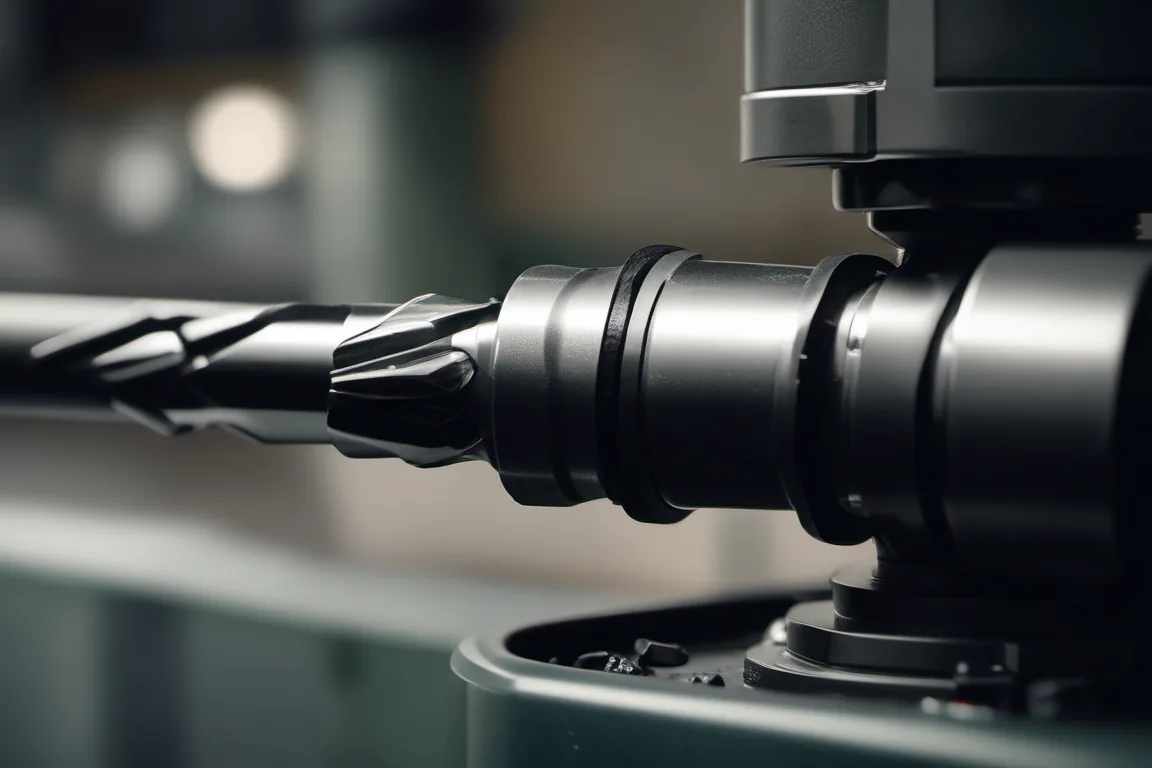
Air blast cooling prevents thermal shock and chip removal costs less than managing fluid waste. Flood cooling effectively lowers tool temperature but struggles to reach deep holes for edge lubrication. In graphite and laminate, air blast is clearly superior due to material properties and chip handling needs. Hardness of carbide tools ranges from 1800 HV to 2000 HV, crucial for maintaining sharp edges. Geometry with a 130-degree point angle optimizes cutting efficiency in micro holes.
The variable and the range it can take
Carbide hardness ranges from 1800 HV to 2000 HV for optimal wear resistance and durability. This hardness ensures that the tool maintains its edge during extended cutting operations. The point angle of 130 degrees helps concentrate cutting forces, reducing chip thickness effectively. Diameter range varies from 0.13 mm up to 10.3 mm, allowing precise control over hole size in micro machining applications. Part number DC826 covers this extensive diameter spectrum for versatile tooling needs.
Rotational speed can be set between 25000 rpm and 15000 rpm depending on material hardness and workpiece requirements. Feed rates range from a minimum of 50 mm/min to a maximum of 750 mm/min, adjusting according to the depth of cut needed. Cutting speed varies between 100 m/min and 180 m/min for efficient chip removal without damaging the tool edge. Depth of cut can be as shallow as 0.01 mm or extend up to 0.5 mm, providing flexibility in different machining scenarios. Feed per tooth ranges from a minimal 0.005 mm/tooth to a maximum of 0.02 mm/tooth for finer control during micro hole drilling operations.
| Specification | Value |
|---|---|
| Point angle | 130 ° |
| Carbide hardness | 1800–2000 HV |
| Series diameter range | 0.13–10.3 mm |
What it changes in the cut
Changing from air blast to flood cooling reduces cutting force by up to 35 percent at 180 m/min due to improved lubrication and chip clearance efficiency. Flood cooling also lowers tool temperature more effectively, reducing thermal shock risks and extending carbide durability within the 1800–2000 HV range. Air blast cooling limits effective chip evacuation in deep holes, which leads to higher cutting forces and increased risk of edge wear at depths exceeding 0.05 mm.
In contrast, flood cooling ensures constant temperature control, maintaining tool integrity during high-speed operations like those at 15000 rpm for graphite materials. For general machining, air blast cooling is sufficient, but for micro holes in delicate materials such as laminate and graphite, flood cooling is essential to prevent overheating.
Where the limit comes from
Carbide hardness of 1800 HV to 2000 HV limits wear and maintains edge sharpness during cutting operations. Higher speeds at 180 m/min increase cutting forces, straining tool geometry with a 130-degree point angle. At depths over 0.5 mm, flood cooling cannot reach the cutting zone, reducing its effectiveness significantly. Air blast removes chips efficiently without thermal shock to the brittle carbide material in micro holes. Tool durability and performance are thus constrained by both machining parameters and coolant access limits.
Workpiece material properties also affect cooling choice; graphite needs minimal heat input to avoid damage. Laminate cutting benefits from air blast due to its ability to clear chips without fluid residue issues. Machine rigidity influences the effectiveness of flood cooling, as vibrations can degrade tool life rapidly. In summary, the decision between air blast and flood cooling depends on workpiece type, machine capability. Optimal coolant selection balances chip removal efficiency with maintaining carbide tool integrity at high speeds.
Setting it in practice
For optimal performance with air blast cooling, ensure the tool’s point angle is set at 130 degrees before starting the job. Adjust spindle speeds to 25000 rpm for carbon materials and reduce to 18000 rpm or lower for common metals. Maintain a feed rate of 50 mm/min for fine work on graphite and laminate. Increase feed rates to 75 mm/min for general use in harder metals like steel.
For flood cooling, monitor chip evacuation closely to avoid thermal shock at depths exceeding 0.1 mm. For air blast operations, use ap values between 0.01 mm and 0.05 mm for precision work on carbon materials. Flood cooling allows larger ap ranges up to 0.5 mm in harder metals but requires careful monitoring of chip formation. Regularly inspect the cutting edge after each hole or part run to detect wear early, especially at higher speeds above 180 m/min where carbide hardness proves crucial for maintaining sharpness and durability.
Frequently asked
How does air blasting compare to flood cooling for micro holes?
Air blasting removes chips without thermal shock and reduces fluid handling costs, making it ideal for carbide tools cutting at high speeds like \(180 \, \text{m/min}\). Flood cooling provides better temperature control but struggles to reach the cutting edge in deep holes.
What's the right way to cool when drilling micro holes?
For micro hole drilling, air blasting is preferred over flood cooling due to its effectiveness in chip removal and reduced risk of thermal shock. This method works well at high spindle speeds up to \(180 \, \text{m/min}\) without damaging carbide tools.
Why use air blast instead of coolant for graphite?
Air blast cooling is superior for graphite because it prevents thermal shock and avoids fluid contamination issues. Flood cooling can introduce debris and affect workpiece integrity in materials like graphite where purity is critical.