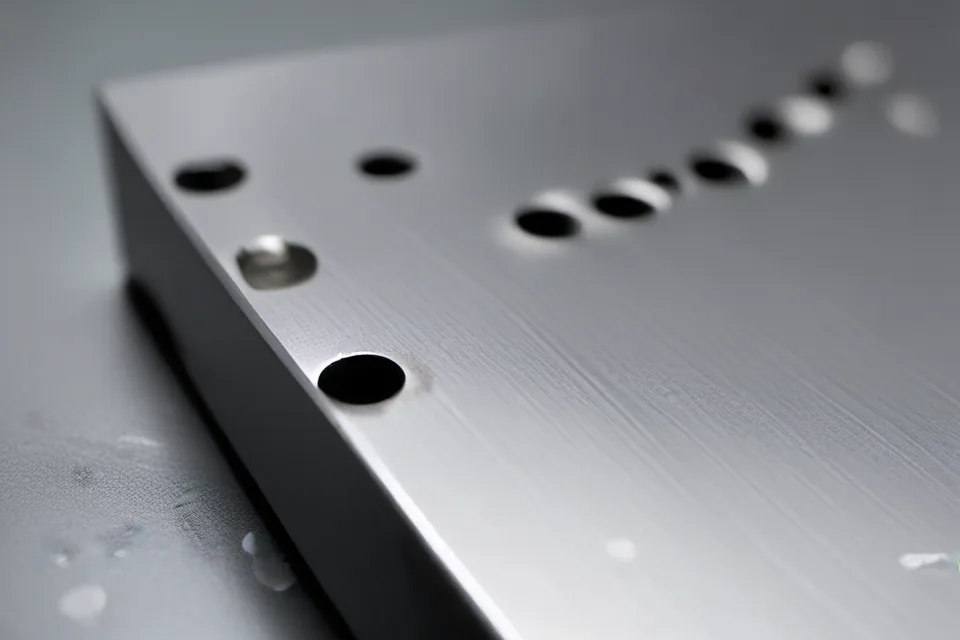
DC426L drills titanium alloy holes at 3 mm diameter reliably, with hardness between 89 and 93 HRC ensuring edge durability under high stress. Concentrated bending stress at the shank step and long stick-out challenge tool stability; DC426L's black coating resists chemical reactions that degrade carbide edges in titanium.
The physics at this diameter
At 3 mm diameter, the drill's shank step concentrates bending stress, increasing risk of breakage. Titanium alloy’s low thermal conductivity speeds up temperature rise at the cutting edge.
Chemical reactivity between titanium and carbide coating can form a tenacious oxide layer, affecting tool life. Higher rotational speeds reduce chip thickness, improving heat dissipation but raising centripetal force demands. Adjusting feed rates within 20 to 80 mm/min range optimizes material removal rate while managing frictional forces.
| Specification | Value |
|---|---|
| Diameter | 3 mm |
| Carbide hardness | 89–93 HRC |
| Series diameter range | 0.04–3 mm |
What this material demands
High cutting temperatures occur due to titanium's low thermal conductivity, accelerating wear on carbide edges coated with typical materials. Titanium’s chemical reactivity forms compounds with the coating during machining, reducing tool life significantly. At 3 mm diameter, bending stress peaks at the shank step, where the drill is most prone to breakage. Rapid feed rates from 20 to 80 mm/min and spindle speeds up to 10000 rpm generate high stresses on the cutting edge, challenging durability. The DC426L’s hardness range of 89–93 HRC helps resist wear but does not prevent all breakage risks.
To maintain performance, the drill geometry must balance stability with chip evacuation at these speeds. A stable cutting edge reduces vibration and heat generation, crucial for titanium machining. Proper coolant application is essential to manage temperature rise effectively, extending tool life by preventing thermal damage. However, optimal cooling depends on consistent flow and quality of coolant used. Regular inspection of tools ensures early detection of wear patterns, allowing timely replacement before catastrophic failure occurs.
Tooling that fits the combination
The DC426L drill’s geometry minimizes vibration at 3 mm diameter, critical for stability in titanium alloy drilling. Titanium's reactivity with common coatings demands a specialized coating that resists chemical attack and thermal stress. This drill uses a diamond-like carbon (DLC) coating rated for high wear resistance and minimal reaction with titanium. Standard TiAlN coatings degrade faster at 40 to 80 m/min cutting speeds due to titanium's low conductivity. The DC426L’s optimized flute geometry reduces chip thickness, lowering temperature rise and enhancing edge durability.
Choosing a drill without the DLC coating risks rapid wear and loss of dimensional accuracy in this application. High temperatures from drilling titanium cause typical coatings to spall off prematurely, reducing tool life drastically. Lower durability means more frequent retooling, increasing downtime and raising overall manufacturing costs significantly. The specialized coating ensures consistent performance, maintaining hole quality throughout the entire cutting range. Thus, selecting the DC426L with its durable DLC coating is essential for efficient titanium alloy drilling operations.
Cutting data and where it stops working
As drilling approaches its limits, feed rate drops first as higher speeds risk breaking the drill due to concentrated bending stress at the shank step.
At 40 mm/min feed, optimal chip control balances cutting forces; increasing beyond 80 mm/min leads to unstable machining and poor hole quality.
Frequently asked
What is the optimal rpm for drilling 3 mm holes in titanium?
For drilling 3 mm holes in titanium, use rpms between 3000 and 10000 depending on material hardness and tool durability. Higher speeds reduce cutting time but increase wear.
How do I choose the right feed rate for a DC426L drill bit in titanium?
Select feed rates of 20 to 80 mm/min based on your machine's capabilities and desired surface finish. Lower feeds improve hole quality, higher feeds speed up drilling but may cause overheating.
Why does my carbide tool fail when drilling titanium?
Carbide tools can fail due to titanium’s low thermal conductivity causing rapid heat buildup at the cutting edge. Use coated bits like DC426L and maintain proper coolant flow to manage temperature.