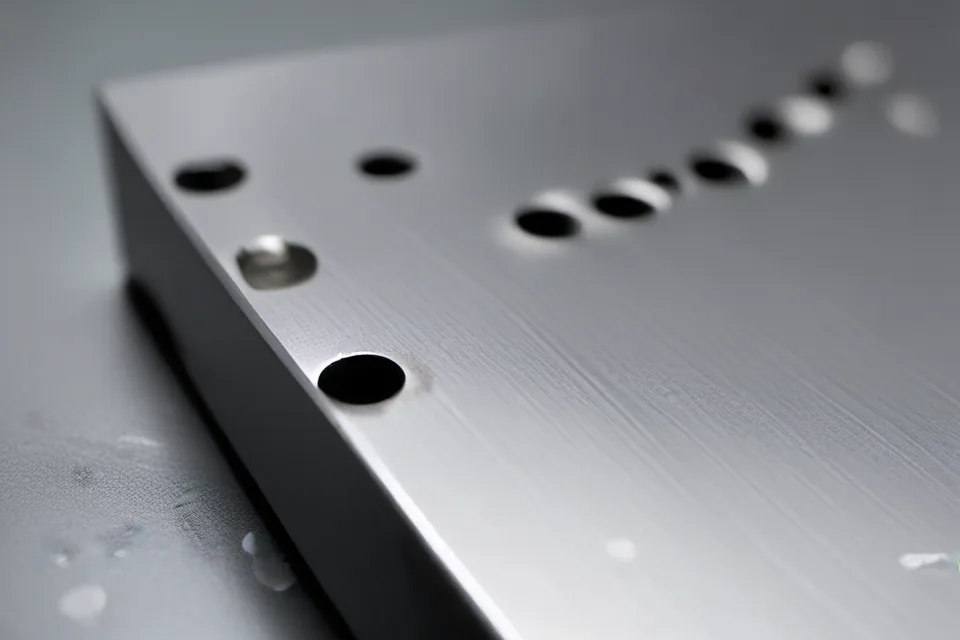
DC426L drill bits with an HRC hardness between 89 and 93 ensure consistent performance when drilling 1.5 mm holes in nickel-based alloys. Their geometry allows optimal chip control and coolant flow, preventing heat buildup at the cutting edge. At speeds of 3000 to 10000 rpm and feeds from 20 to 80 mm/min, these drills maintain continuous cutting stability. The black coating enhances wear resistance, prolonging tool life in demanding materials. Thus, DC426L bits deliver reliable hole quality, essential for precision manufacturing processes.
The physics at this diameter
At 1.5 mm diameter, the cutting edge engages deeply with nickel-based alloy, generating substantial friction and heat at the contact point. This interaction causes rapid localized hardening of the material, challenging tool durability. To mitigate this, slower feed rates and lower spindle speeds are essential for maintaining a consistent chip thickness and reducing edge wear. The black coating on DC426L series tools helps dissipate heat away from the cutting zone efficiently. Slower rotations allow coolant to reach critical areas more effectively, preventing overheating and extending tool life.
As diameter increases to 2 mm, the physical space around the tool also expands, offering better chip evacuation and cooling potential. However, thicker chips can accumulate faster, requiring precise control of axial depth and feed rate to avoid excessive cutting forces. This scaling effect means that while larger drills may seem similar to smaller ones, their operational parameters differ significantly due to changing dynamics in material removal. Adjusting for these variations ensures optimal performance and longevity in nickel-based alloys. Smaller drills benefit from tighter tolerances and more controlled heat generation, whereas larger drills require broader adjustments to manage increased cutting volumes effectively.
| Specification | Value |
|---|---|
| Diameter | 1.5 mm |
| Diameter | 2 mm |
| Carbide hardness | 89–93 HRC |
| Series diameter range | 0.04–3 mm |
What this material demands
The high hardness of DC426L drill bits minimizes wear during drilling but requires precise coolant flow control. Insufficient cooling leads to premature edge dulling and reduced tool life. Nickel-based alloys' rapid hardening necessitates slower cutting speeds compared to titanium, ensuring the carbide material remains effective. Faster speeds can cause excessive heat buildup at the cutting edge, reducing performance consistency. Coolant must be applied continuously and in sufficient volume to prevent thermal damage and maintain cutting efficiency.
Insufficient coolant flow mimics a hardness limit by accelerating wear rather than actual alloy hardness. Edge geometry plays a crucial role; flatter angles distribute forces better but may trap chips if not cleared adequately. Optimal edge angle minimizes friction while ensuring chip evacuation, maintaining consistent drilling performance. Fluctuations in feed rate and spindle speed can compromise the cutting process stability, which leads to inconsistent hole quality. Consistent parameter settings are critical for achieving repeatable results with nickel-based alloys.
Tooling that fits the combination
The DC426L drill bit's geometry optimizes chip evacuation in narrow diameters like 1.5 mm for nickel-based alloys. A larger diameter, such as 2 mm, would reduce friction but compromise precision due to wider chips.
For nickel-based materials, an HRC hardness of 89–93 ensures durability and wear resistance under high-temperature conditions. Lower hardness compromises edge retention during the drilling process in these tough materials.
Cutting data and where it stops working
As hole diameter increases from 1.5 mm to 2 mm, the cutting speed range for DC426L narrows from 40 m/min to 80 m/min due to higher material removal rate. Coolant flow must stay constant at optimal values across all diameters; insufficient cooling causes premature wear and temperature spikes near edges in nickel alloys. The drill's feed rate doubles with each step up in diameter, but the recommended rpm range decreases significantly for structural stability reasons.
When drilling exceeds 1.5 mm without proper adjustment of cutting parameters, edge dulling occurs rapidly due to intensified heat accumulation at higher speeds. Drill geometry changes accommodate larger diameters by enhancing rigidity and chip ejection efficiency, critical adjustments when transitioning from 1.5 mm to 2 mm holes.
Frequently asked
What is the right rpm for drilling 1.5 mm holes in nickel-based alloy?
For optimal performance when drilling \(1.5 \, \text{mm}\) holes in nickel-based alloys, use a range of \(3000\) to \(6000\) RPM. This ensures consistent cutting and minimises heat buildup at the tool edge.
How do I select the right carbide drill for titanium?
Choose a DC426L series carbide drill coated black with an HRC rating between 89 and 93. It handles high temperatures well, making it suitable for drilling titanium and similar alloys effectively.
What feed rate should I use when working with nickel-based alloy?
Use a feed rate of \(20\) to \(40 \, \text{mm/min}\) for drilling in nickel-based alloys. This range balances cutting efficiency and tool longevity by reducing heat generation at the cutting edge.