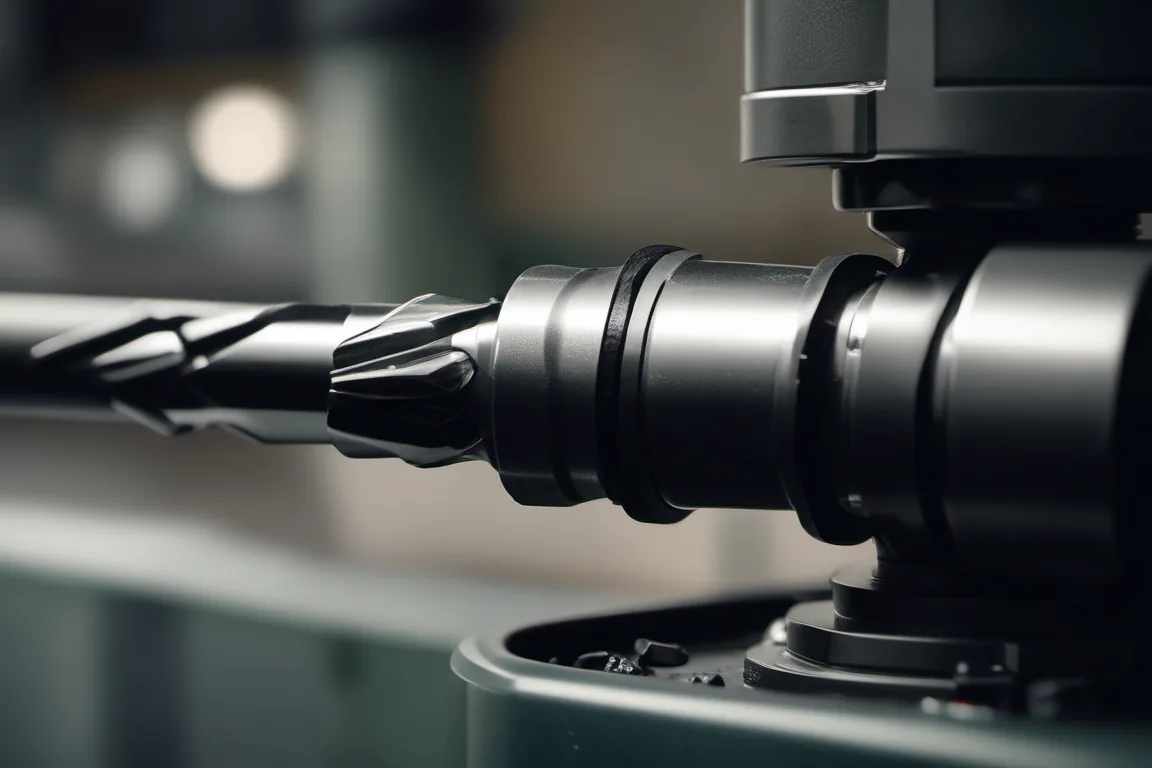
DC326 carbide tools offer a precise feed resolution, critical for fine machining tasks. At 0.05 mm diameter, they perform with unmatched precision and reliability. With hardness ranging from 89 to 93 HRC, these tools maintain sharp edges during cutting. Feed rates of up to 150 mm/min ensure efficient material removal without compromising surface finish. This resolution prevents rubbing on the workpiece, ensuring clean cuts even at small increments.
The variable and the range it can take
DC326 carbide tools feature a feed resolution critical for achieving precise cuts. Feed resolution varies from 0.005 mm/tooth to 0.08 mm/tooth, depending on application needs. Smaller increments allow finer control during micro-machining operations. Larger values suit general machining tasks where speed is prioritized over precision. For DC326 tools, a typical range for ap is from 0.1 to 0.5 mm, ensuring versatility across different cutting depths.
Feed resolution impacts surface finish and tool life in stainless steel applications. Optimal feed rates at 15000 rpm are lower than those used at 7000 rpm or 5000 rpm speeds. Lower feed rates during high-speed machining minimize work hardening and improve dimensional accuracy. Machining parameters like vc between 60 to 120 m/min affect achievable feed resolution settings. Fine-tuning these settings helps prevent rubbing, ensuring effective chip formation and cutting efficiency.
| Specification | Value |
|---|---|
| Diameter | 0.05 mm |
| Carbide hardness | 89–93 HRC |
| Series diameter range | 0.04–3.17 mm |
What it changes in the cut
Using DC326 carbide tools reduces cutting force by allowing finer feed adjustments at small diameters. Smaller steps mean less impact on material per pass. For instance, at a diameter of 0.05 mm, the tool ensures smoother chip formation and lower temperatures during machining. Reduced friction means less heat generation in the cut zone. Temperature control is critical as it prevents work hardening and maintains dimensional accuracy.
Lower temperatures also extend tool life by reducing wear from thermal cycling. Finer feed rates enable better surface finish on materials like stainless steel, crucial for precision parts manufacturing. Smaller chips are ejected more efficiently, contributing to a cleaner cutting process overall. The DC326's precise control over feed ensures optimal chip thickness at various depths of cut, enhancing machinability across different operations. This results in consistent part quality and reduced waste from rework.
Where the limit comes from
DC326 carbide tools operate within a narrow range of feed rates for optimal cutting performance. This precision prevents rubbing and work hardening during machining. Smaller diameters, like 0.05 mm, require more delicate adjustments due to higher surface speeds. Machine controllers capable of finer feed increments are necessary to avoid damaging the material. Tools with coarser settings will produce inconsistent results at such small scales.
The hardness of DC326 carbide tools ranges from 89 to 93 HRC, ensuring durability and wear resistance. However, extreme precision demands machine capabilities that match tool specifications. Feed rates between 0.005 mm/tooth and 0.08 mm/tooth are critical for micro-finishing applications. Achieving these precise feeds requires advanced CNC machines with high-resolution stepper motors. Without such machinery, the cutting process devolves into material deformation rather than clean removal.
Setting it in practice
To set DC326 tools on a job, start by confirming your machine's smallest feed increment matches the tool’s capability accurately. Adjustments must align precisely within 0.005 mm/tooth for micro cutting and up to 0.08 mm/tooth generally. Before running production, test with trial cuts using recommended rpm settings of 15000, 7000, or 5000 depending on material hardness. Ensure feed rates stay within specified limits: stainless steel requires slower rates at 30 to 45 mm/min; common materials use faster feeds up to 150 mm/min.
Monitor the first hole closely for signs of rubbing such as increased vibration or temperature rise, indicating a mismatch between machine and tool capabilities. Adjustments may require reducing rpm slightly if excessive forces are detected during cutting tests. Successful cuts show clean edges without signs of work hardening or out-of-tolerance dimensions.
Frequently asked
What is the feed resolution limit for carbide tools?
Feed resolution limits occur when machines cannot provide small enough increments, causing rubbing instead of cutting. For precise work on stainless steel and common materials, use carbide tools like DC326 with a diameter range from 0.04 to 3.17 mm.
How does feed rate affect hole size accuracy?
Feed rates that are too high can lead to work-hardening the material around the hole, making it difficult to achieve accurate sizes. Adjusting the feed rate within recommended ranges ensures better dimensional stability and surface finish quality.
Why do carbide tools need precise feed settings?
Carbide tools require precise feed settings because their hardness ranges from 89 to 93 HRC, which makes them highly sensitive to machining parameters. Inaccurate feed rates can cause tool wear or damage, which leads to poor part quality and reduced tool life.