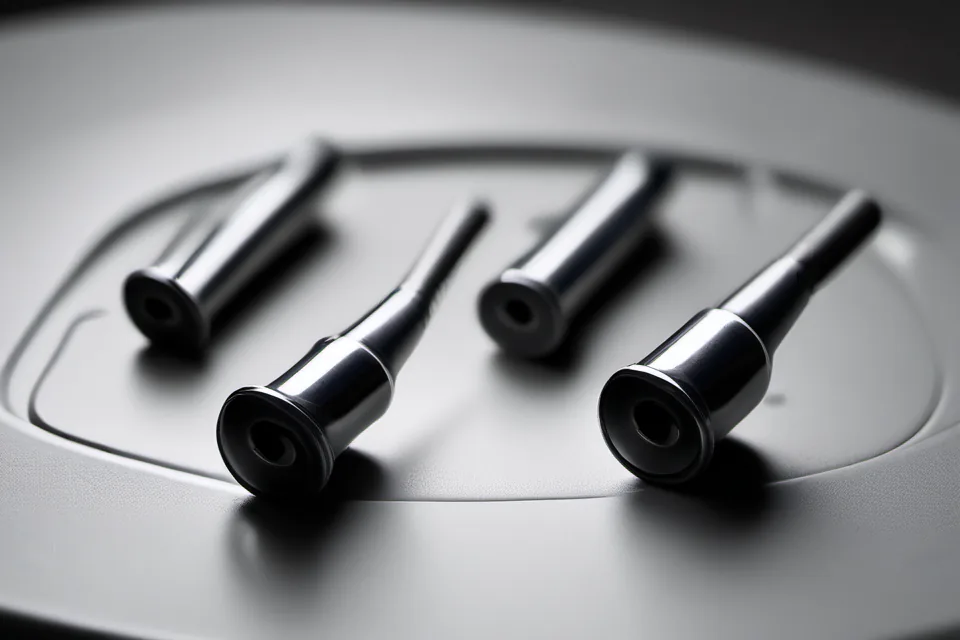
Carbide tools with an 89–93 HRC hardness cut alloy steel efficiently, resisting abrasive wear from hard carbides within the metal. These hard carbides polish the tool's surface rather than causing rough abrasion. As the alloy content increases, so does the wear on the cutting edge, impacting durability and lifespan significantly. Tools with a 135° point angle perform well in this range but require precise adjustment to maintain optimal performance. Higher speeds at 20000 rpm reduce tool life faster than lower speeds of 9000 rpm due to intensified abrasive action.
The mechanism
Hard carbide particles within alloy steel abrade the cutting tool's surface, causing wear over time. This abrasive action forms a polished area on the tool rather than a rough one. As alloy content increases in the workpiece material, more hard particles are present to cause abrasion. The hardness of these particles ranges from 89 to 93 HRC, matching or exceeding that of the cutting tool itself. At higher speeds and lower feeds, the abrasive wear rate typically accelerates.
The geometry of the carbide tool plays a critical role in managing this wear. A point angle of 135 degrees helps distribute forces evenly across the cutting edge. Different feed rates—40 mm/min to 270 mm/min—are used depending on the material hardness and thickness. Rotational speeds range from 9000 rpm to 20000 rpm for optimal cutting efficiency. With these parameters, abrasive wear is controlled while maintaining high productivity levels.
| Specification | Value |
|---|---|
| Point angle | 135 ° |
| Carbide hardness | 89–93 HRC |
| Series diameter range | 0.1–14 mm |
The conditions that produce it
Abrasive wear appears when cutting alloy steels with high hardness and abrasive carbides. Hardness range of 89–93 HRC ensures efficient machining despite these challenges. Increased feed rates and lower speeds reduce wear by minimizing contact time between tool and workpiece. For example, using 20000 rpm with a 40 mm/min feed rate minimizes surface interaction. Slower cutting at 9000 rpm requires more cautious feeding to prevent excessive abrasive action.
Lowering feed to 100 mm/min under these conditions helps mitigate wear effectively. Higher alloy content in the steel intensifies abrasive wear. Using consistent geometry, like a 135° point angle, maintains tool stability across varying hardnesses. Careful selection of cutting parameters ensures longevity and performance in challenging materials.
How to recognise it on the tool
Abrasive wear on carbide tools appears as a smooth, polished area near the cutting edge due to hard carbides in alloy steel. This surface differs from typical rough wear patterns seen with other materials.
On the tool, abrasive wear progresses slowly at first but accelerates if operating conditions remain unchanged or worsen. Operators may confuse this type of wear with thermal damage, which also smooths surfaces but typically shows discoloration too.
What actually removes the cause
To address abrasive wear effectively, use a carbide tool with high hardness like DC836 rated at 89–93 HRC for better resistance against hard carbides in alloy steel. The point angle of 135 degrees on DC836 helps distribute cutting forces more evenly, reducing localized stress and heat that would otherwise accelerate wear. Changing the coolant type or increasing its volume does not address the fundamental issue caused by abrasive particles. Proper tool selection is essential for mitigating wear damage.
Carbide tools with a polished surface after machining indicate severe abrasive wear from alloy steel's hard carbides. The geometry of DC836, designed specifically for such materials, minimizes this type of wear. Relying solely on faster cutting speeds or higher feed rates to reduce contact time between the tool and workpiece can lead to increased thermal stress and rapid wear progression. Adjusting machining parameters alone is insufficient without a suitable tool design.
Frequently asked
What is abrasive wear on carbide tools?
Abrasive wear occurs when hard particles, like carbides in alloy steel, scrape against the cutting edge, polishing it and causing gradual wear. Higher alloy content increases this effect.
How do I know if my tool has abrasive wear?
Look for a polished area on the cutting edge rather than rough scratches. This indicates abrasive wear from hard carbide particles in the workpiece material.
What are the optimal speeds and feeds for DC836 tools?
For DC836, use rpm settings of 20000, 13000, or 9000 depending on alloy hardness. Feed rates should be set at 40 mm/min, 60 mm/min, 100 mm/min, or 270 mm/min for right performance.