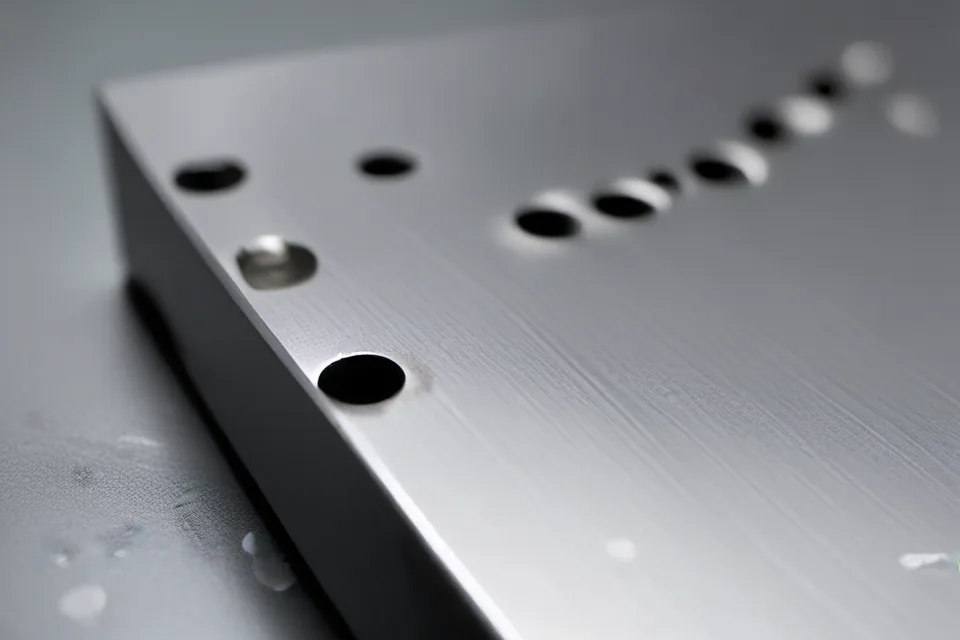
DC426L carbide drills with a hardness range from 89 to 93 HRC offer exceptional strength for drilling 0.3 mm holes in titanium alloy. This material maintains durability under high temperatures, which occur quickly due to titanium's low thermal conductivity and chemical reactivity. The drill geometry minimizes edge wear by distributing cutting forces evenly across the tool surface. Operating at speeds of 3000 rpm to 10000 rpm with feed rates up to 80 mm/min ensures efficient material removal while preserving tool integrity. This combination of properties enables reliable hole production even in challenging machining environments, enhancing overall process stability and reducing downtime.
The physics at this diameter
At 0.3 mm diameter, titanium alloy poses unique challenges due to its low thermal conductivity and high chemical reactivity with coatings. This causes rapid heat buildup at the cutting edge, accelerating wear and potential material failure. DC426L drills maintain stability in imperfect setups, thanks to their robust geometry and hardness range of 89 to 93 HRC. Higher rotational speeds from 3000 rpm to 10000 rpm increase efficiency but also raise temperatures at the cutting edge significantly.
Lower feed rates between 20 mm/min and 40 mm/min help manage heat, reducing wear on the black-coated surface that resists titanium's reactivity. As hole size decreases, coolant delivery becomes more critical for effective heat dissipation during drilling operations. Adjusting parameters carefully ensures optimal performance within the specified diameter range of 0.3 mm.
| Specification | Value |
|---|---|
| Diameter | 0.3 mm |
| Carbide hardness | 89–93 HRC |
| Series diameter range | 0.04–3 mm |
What this material demands
At 0.3 mm diameter in titanium alloy, high cutting speeds are critical to prevent heat buildup on the tool edge. High temperatures accelerate wear on carbide drills due to chemical reactions with titanium. The coating must withstand these reactions while maintaining lubricity for smooth chip formation. Titanium's low thermal conductivity requires efficient heat dissipation from the cutting zone. At 3000 rpm, the drill can manage lower cutting speeds but faces increased risk of edge degradation at higher speeds like 10000 rpm.
Higher feed rates up to 80 mm/min help maintain temperature control by reducing contact time between tool and workpiece. This material demands precise control over coolant flow to prevent thermal shock and extend tool life. Efficient chip evacuation is also crucial, as clogging can lead to rapid wear and poor surface finish. The drilling process must balance speed and feed parameters carefully to ensure optimal performance and durability of the DC426L carbide drill in titanium alloy applications.
Tooling that fits the combination
For drilling titanium at 0.3 mm diameter, a TiAlN coating is preferred over TiCN due to better heat resistance. Titanium's chemical reactivity degrades TiCN faster than TiAlN under high temperature conditions.
The DC426L drill uses sharp geometry with a point angle optimized for this size and material combination. A sharper edge reduces cutting force, minimizing the risk of tool breakage in titanium alloy. At 3000 to 10000 rpm, faster rotation helps manage heat by increasing chip evacuation speed. This prevents excessive temperatures that could damage the coating or alter drill geometry.
Cutting data and where it stops working
As hole diameter decreases below 0.3 mm, maintaining consistent cutting speed becomes increasingly challenging due to machine limitations. Reduced tool engagement means less stability at higher speeds, causing vibration that degrades accuracy. Feed rates must adjust proportionally to avoid chipping or breaking the tiny drill point. Lower feed rates allow for better chip control and reduce heat generation on the tool edge.
Machine rigidity limits drilling speed effectiveness below 3000 rpm in smaller holes. As cutting data approaches its lower threshold, material removal efficiency drops significantly. At this stage, drilling becomes more about precision than speed, emphasizing stable clamping over aggressive settings. Below optimal parameters, process reliability decreases sharply, necessitating careful setup to prevent failures.
Frequently asked
What is the right rpm for drilling 0.3 mm holes in titanium?
For drilling 0.3 mm holes in titanium, use rpm settings of 3000, 6000, or 10000 depending on your machine's capabilities and desired surface finish.
How do I choose feed rate when drilling titanium with a 0.3 mm bit?
Select feed rates between 20 to 80 mm/min based on the rpm setting and chip load to prevent overheating and wear.
What is the hardness range of carbide used in DC426L for titanium work?
DC426L bits have a carbide hardness range from 89 to 93 HRC, making them suitable for drilling hard materials like titanium.